
NOTE FROM JEFF: Many thanks to Jon Eisen, editor of
Uncensored magazine, for giving me the necessary time to complete this article for their next issue...
"I think that the cetaceans are using their highly advanced ‘internal technologies’ of group-telepathy and holographic consciousness-transmission to beam their love and message into the human psyche, now more than ever...Within their collective psyche they may have memories and knowledge of the history of Earth and humanity that we are unable and/or unwilling to access. They may have knowledge of life elsewhere in the universe…of telepathically-connected galactic communities…and a greater appreciation of the beauty and uniqueness of life on THIS planet. Perhaps they are the ‘mind of Gaia’ herself."

KINA the DEAF PSEUDORCA

NAVAL EXERCISE HARASSES ORCAS

MIND-CONTROLLED ORCA

NAVAL LFA-SONAR VESSEL

LFA-SONAR TRANSDUCER

'KILL ZONE THE SIZE OF TEXAS'

KING-PINS OF CETACEAN MASS-MURDER

WHO THE NAVY WORKS FOR

SEISMIC EXPLORATION VESSEL

DRINKING THE BLOOD OF MOTHER EARTH

UNNATURAL DISASTER

STRATEGIC CONTAMINATION OF GULF STREAM

ANOTHER UNNATURAL DISASTER

STRATEGIC CONTAMINATION
OF PACIFIC OCEAN and NORTHERN HEMISPHERE

CHEM-TRAILS OVER BELGIUM
(photo by Liesbet Verstraeten)

CHEM-TRAILS OVER BELGIUM
(photo by Liesbet Verstraeten)

THE FUTURE OF THE 'ULTIMATE INDIGENOUS PEOPLE'?

BLUE WHALES

BOWHEAD WHALE

HUMP-BACK BREACHING

CACHALOT (SPERM WHALE)

BOTTLE-NOSED DOLPHINS

DOLPHIN KILLED BY RIVER CONTAMINATION

U.S. NAVY's WAR ON CETACEANS

THE FAMILY OF CETACEA
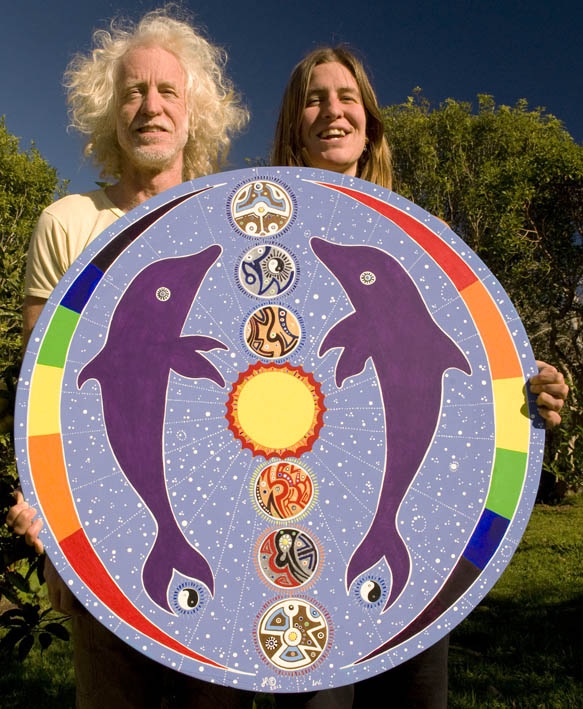
'WEFFIOPS', 'BLUE AQUATIC SNOEZIEQUE' & AIHE's

'CETACEAN RAINBOW CONVERGENCE'


THE ULTIMATE TECHNOLOGY

MOTHERSHIP EARTH

MOTHERSHIP EARTH

SYMBOLS OF 'TULIP' & 'TETI'
‘WE ARE NOT ALONE…YET’:
HOW WE ARE WAGING WAR ON A TRUE ‘EXTRA-TERRESTRIAL INTELLIGENCE’
HOW WE ARE WAGING WAR ON A TRUE ‘EXTRA-TERRESTRIAL INTELLIGENCE’
JEFF PHILLIPS
INTRODUCTIONModern man believes that he is ‘alone’ in the universe, yet nothing could be further from the truth. The mind-set of ‘civilized’ western humanity takes for granted that our collective world-view, the human perspective on life on Earth, represents the pinnacle of awareness, the paragon of ‘intelligence’, that we are sine pari, “without equal” in the kingdoms of life, above and apart from mere ‘animals’ and other ‘lower’ life-forms. This unquestioned anthropocentric ‘meta-belief’, the central pillar supporting the dominant dMOE(1), or ‘distributed mental operating environment’ which facilitates our fundamentally Judaeo-Christian neo-Darwinian military-industrial-capitalist ‘way of life’, justifies ecocide, rationalizes genocide, glorifies predation, rewards greed, derides simplicity, denies indigenous and alternative modes of being, and is conducting a full-spectrum jihad against life itself.
We have never been ‘alone.’ In the same way that we needn’t ‘go into space’ because we’re already there…how could we NOT be?...we’ve never been alone because our true ‘family’ is the universe, which as currently conceived may host not only a very broad spectrum of ‘beings’, ‘intelligences’ and forms of consciousness…of far greater diversity, improbability and unknowability than the sum of all science-fiction…but is ‘intelligent’ and ‘conscious’ in and of itself. Our nearest star, the sun, Sol, is a powerful stellar ‘being’ and ‘intelligence’; Mothership Earth, or Gaia, is herself an astronomically complex planetary ‘being’ and ‘intelligence’. The union of Father Sky and Mother Earthgives birth to life as we know her, a vast creative and experimental intelligence based on DNA, carbon compounds, and water who manifests herself as an endless expression of living art-information. Every being, every form of life is by nature ‘intelligent’ in its own way.(2)Humanity seems to be an anomaly on this planet: we are the only species among billions who have run amok and are actively destroying our home (3), as well as the only species who is embedded in collective hallucination, harbouring destructive delusions about our own alleged and superior ‘intelligence’ and other ‘chosen species’ fantasies.(4)
The cetaceans, the whales and dolphins, have lived in the ocean of Earth for tens of millions of years, according to our consensus model of time, and represent a vast supra-human ‘intelligence’ akin to our own in fundamental ways, yet truly ‘alien’ beyond comparison in equally fundamental ways. They have been here ten times longer than we have, with neuro-biological ‘internal technology’(5) far in advance of ours, living in far greater harmony with the more supportive and protective environment they inhabit. The breadth, depth and quality of their ‘reality’, their experience and ‘management’ of dimensions we refer to as ‘time’, ‘space’, ‘awareness’, ‘memory’, and ‘knowledge’ may exceed ours by several orders of magnitude. Their inner life is a vast unknown to us; if and when we become capable of comprehension, we may find their ‘reality’ to be far more expansive, far more ‘beautiful’ than anything we pretend to access.
Mainstream humanity is fascinated by cetaceans, but the attraction is hard to define. Cetaceans are BIG BUSINESS these days, particularly in mass-media and the ‘eco-green’ movement.(6) We like to listen to their ‘songs’, and we love to watch them, on ‘nature’ documentaries and or ‘whale-watching’ tours, or even swim with them in ‘dolphin-encounter’ groups; we recoil in horror at the sight of a harpoon-gun-wielding Japanese whaler, and instantly pull out our credit cards and activate the ‘donate now’ buttons on the web-sites of an ever-growing number of ‘save the whales’ organizations. We do this almost instinctively; we are eager to free them from captivity, and want them to have the same ‘rights’ as ‘people’; or pay environmental organizations to do this for us. The latter option is a little more convenient for most people, plus it’s a tax write-off.
Whales and dolphins are literary and ‘pop culture heros’ or even ‘celebrities’…Moby Dick, Flipper, Willy, Migaloo…the list goes on. We like to give them names, but ‘what’ do they ‘call’ themselves? In general we love them but we can’t explain why. We are shocked by the barbarity of whaling, we think that ‘it’s a shame’ when a pod washes up on a remote beach; the causes are written off as a ‘mystery.’ We think of them as ‘beautiful’ or ‘magnificent creatures’, possibly even ‘intelligent’, of course; but not nearly as intelligent as WE are. Homo sapiens is not about to dis-enthrone himself as the overlord of creation…not without a fight, any way.
To fight this ‘good fight’ is one of the purposes of this article. How can we possibly ‘save the whales’ when we are not only not even trying to ‘save’ ourselves, much less our fellow beings or our planet, but putting the ‘pedal’ of our technological juggernaut ‘to the metal’? How can we possibly believe that we are somehow “intelligent” when the obvious result of ‘civilization’ is wanton destruction of the Earth, including ourselves? How can we possibly hope to ‘communicate’ with a vast non-human consciousness when our own ‘reality’ is riddled with acute chronic delusion and radical contradiction, when as a whole we have little or no understanding of our own psychological processes? (7)
My primary purpose in this article is not only to ‘dis-enthrone’ man from the apex of megalomania, but more significantly to explore who the cetaceans are as fellow sentient beings…at least our ‘equal’ but more than likely light-years ahead…what the real global threats to their well-being actually are…and the implications of this awareness, the danger and the revelation. The best way to do this will be to look at the mainstream beliefs and assumptions in the ‘popular mind’, and to contrast this with what I believe to be a much more enlightened, informed and realistic appraisal. This article can only be an introductory map or outline and hopefully a source of inspiration; it cannot possibly encompass all the dimensions of knowledge, research and imaginative speculation necessary even to begin this journey of journeys, whose destination is no less than the unknown and possibly unknowable nature of life, the universe and everything…of who we are.
Western man looks to the stars hoping that someday he will discover…or be ‘contacted’ by…’beings from space’…who will teach him the secrets of the universe and rescue him from the karma of the ages. The psychological foundation of this impulse is more ‘religious escapism’ than ‘spiritual quest’, looking ‘out there’ instead of here and now, around and within. Modern man’s ‘long loneliness’, mourned by naturalist Loren Eiseley(8), is no more than his alienation from nature, a self-imposed delusion more accurately termed a ‘long blindness’, a ‘long ignorance’ which has precluded our awareness and understanding of and relationship with not only all living beings including our planet, but in particular a true ‘extra-terrestrial intelligence’ (TETI)(9) here and now, inhabiting a ‘separate reality’ on Mothership Earth…not our ‘saviours’ but our teachers and friends.
That beings far in advance of us have lived on the same planet far longer than we have is a HUGE leap for the mainstream western mentality, and is likely to be met with great cognitive resistance. “If this is true”, they might say, “why haven’t they contacted…or conquered…us? Where are their cities, their factories, their armies, their ‘advanced technologies’, their ‘signs of intelligence’, of ‘civilization’?”
“One of the biggest differences between the mind-set of modernized humans and traditional indigenous people is that modern folk tend to think of themselves and their civilization as being somehow ‘above’, more ‘advanced’ than, or having conquered the natural world, whereas indigenous people have a little more humility and a sense of the sacredness of the Earth, a respect for that which they do not profess to understand, much less control. The modern scientific paradigm fragments and reduces nature to ‘forces’ and ‘resources’ to be subdued, harnessed and exploited; indigenous cosmologies, viewed as ‘backward’ by ‘civilized’ man, are holistic yet pragmatic, striving not for control or material wealth but for the ability to survive, to live in harmony with the Earth, with ‘all our relations’, ‘mitakuye oyasin.’ ‘Civilized’ humanity has lost track of the fact that highly developed social systems, even ‘culture’, can thrive in the absence of manipulation of the material world…” (10)
Using our best knowledge, wisdom, and ‘intelligence’ not only to try to ‘communicate’ with and truly ‘listen to’ or understand the ‘messages’ from the vast TETI the cetaceans truly are, but also to become aware of how the only threats to their well-being originate in human activity, seems to me to be one of the most important endeavours we can put our energy into. In many ways the cetaceans can be seen as ‘ourselves in the future’…not the future we are currently creating, but a possible future in which we’ve returned to the womb of nature and remembered who we really are and reclaimed our true spiritual nature…one that they never lost. At this time we are on the verge of rendering the entire biosphere of our planet uninhabitable by life as we know her, including the cetaceans and ourselves. This path, this work may be our best hope for harmonious re-navigation of the human process.
WHO ARE THE CETACEANS?
“The greatest difficulty is to avoid distorting the picture through the lens of human perception with its potential for unbridled anthropomorphism or giving human characteristics to other creatures, on the one hand, and on the other, the Cartesian extreme whereby animals are seen as reflex machines with no mental experiences whatsoever – or none that could be accessible to human investigation.” Wade Doak, Encounters with Dolphins
No one really knows. How could we…we don’t even know who WE are! They have been here much longer than we have, and in the ocean. They figure prominently in the cosmologies and mythologies of all ancient cultures and indigenous peoples living near the sea. The further back in time and history we go, we find many references to a wide variety of aquatic beings, ‘sea monsters’ and ‘mermaids’ for example, or the ‘Nommo’, the half-man/half-fish entity of the Dogon; the cetaceans could be the inspiration for these legends. Throughout human history as we know it, cetaceans have been worshipped, hunted, honoured and exploited; to some they are food, to others they are gods. To any humans who know them at all, they represent the awe and mystery of beings from another world, an environment alien and hostile to man: the global ocean that covers more than 70% of the Earth’s surface. As I will try to demonstrate, to me, the cetaceans are not only a true ‘extra-terrestrial intelligence’, they are also the ‘ultimate indigenous people.’
LIVING IN WATER
In contrast to us and other life-forms who live on land, the cetaceans are pelagicmarine mammals, meaning that they live in water 100% of the time. This fact alone is of enormous significance in terms of understanding them; they are at one with water and the ocean, of which there is really only one. Water may be the most singularly unique and important compound or substance that exists; among its array of unusual properties is the hydrogen bondsunique to its structure. In hydrogen bonding the H atoms are shared equally among all the oxygen atoms in what is literally a ‘fluid’ kind of way: this is what gives water its unique ability to roll, tumble and flow. As well, any contiguous body of water is in fact a single water crystal. (11) These and other properties like thermo-stability and salinitymake the marine environment hospitable to life in ways that the land does not offer. Many scientists believe that life herself originated in the ocean. I have read that in emergency situations, sea-water can be safely transfused into human beings in the absence of blood plasma. What does all this tell us about living in the ocean? That it’s really the place to be on Earth! Not only are sea-dwelling beings almost entirely free from the effects of gravity…think of how much stress we endure and energy we spend trying to counter gravity…they are also more or less totally shielded from the constantly varying energetic bombardment emanating from the sun and more distant sources, like x- and cosmic rays from super-novas, colliding galaxies and the centre of our galaxy, known as Hunab Ku to the Mayans.
In the paradigm of ‘cataclysmic evolution’ formulated most notably by Immanuel Velikovsky, extra-terrestrially originating catastrophes on a planetary scale have influenced the development of life on Earth far more than the ‘long slow uniformitarian’ processes of Lyell and Darwin. (12)Beings living in the sea would be much safer in general in the event of an asteroid or cometary collision, as water is physically more protective than air. Sea beings are accustomed to living with little or no light, and could successfully ride out prolonged periods of climatic instability, or darkness and atmospheric disturbance due to smoke from volcanic eruptions or impacts. According to Velikovsky’s in-depth research, geological as well as historical records show conclusively that cataclysms such as these are the norm for our planet. He concluded that the virulence with which mainstream science has denied the reality of this entire paradigm, even in the face of overwhelming evidence, is due to the collective traumatisation that humanity has under-gone from repeated cosmic catastrophe. In other words, what happened in our distant past, to our ancestors, was so horrific that not only do we as a whole refuse to remember it, we are also unconsciously ‘re-enacting’ these destructive traumas by creating our most advanced forms of technology as weapons now turned against ourselves and all other life. (13)
Beings living in the sea like the whales and dolphins would have been far less traumatized by these events, and would have been shielded from the endless energetic bombardments that I believe have created a state of ‘permanent psychic mutation’ in homo sapiens. This is another, but related, story that could help to explain what seems to have ‘gone wrong’ with ‘man, the wise.’ (14)
PRIMATES VERSUS CETACEANS
Compared to life-forms that live on the land, those who live in the sea are of necessity more obscure and elusive to the ‘peeping toms’ of scientific research and photo-journalism. Cetaceans in particular are not only in constant motion, from the depths of the ocean to the surface to breathe, but also in constant migration around the planet. They are generally inaccessible and therefore more difficult to ‘study’ than humans and other terrestrial life-forms. Non-invasive ‘research’ on cetaceans in their natural environment is extremely difficult if not impossible; the vast majority of this work is conducted in highly injurious and unethical ways, and amounts to studying prisoners in a concentration camp.
In terms of zoology, we are primates and the whales and dolphins are cetaceans, two orders of the class mammalia.
“Mammals are warm-blooded, air-breathing animals that suckle their young. Primates are basically land-dwelling, upright, and four-limbed, with hands. They are the monkeys, apes and humans. Cetaceans are sea-dwelling mammals with highly streamlined bodies and are capable of rapid, extended self-locomotion. Cetaceans have flukes, or flippers, but no hands, and they breathe voluntarily, as opposed to the automatic breathing of most other mammals. They are the porpoises, dolphins and whales.” (15)
Like humans, they have advanced social and communications systems. Zoologists have classified them into two groups, the ‘toothed whales’, or odontoceti, and the ‘baleen whales’, or mysticeti. Odontoceti includes the dolphins, orcas, and sperm whales, who have the largest brains on the planet. Mysticeti includes the fin, gray, blue, right, and hump-back whales, and are the largest life-forms on the Earth.
Symmetrically, we should be comparing primates and cetaceans; humans are only one species out of hundreds of primates, and hundreds of species of cetaceans exist. The limitations of the Linnaean taxonomic system notwithstanding, it’s very interesting to note that cetacea is diverse yet homogeneous; with primates, it seems that a lot of ‘gaps’ exist, a lot of, should I say, ‘missing links.’ Why are there no primates more similar to us than chimpanzees? Some researchers believe that what we call ‘Neanderthal man’ originally co-existed with homo sapiens but then became extinct. Contrary to popular delusion, the story goes that Neanderthal man wore clothes, used tools, made jewelry; not only that, he was quite musical and is believed to have played instruments and sang. His was a neo-lithic and probably shamanic culture. (16) That Neanderthal man was probably killed off by our distant ancestors may not be so much a testament to ‘human nature’ as to aberrant behaviour due to ‘permanent psychic mutation.’
Since humans and cetaceans are both mammals, we are quite similar at the most fundamental levels of biology and physiology; but very important differences exist. One is that they do not breathe automatically like we do, but voluntarily, from once every few minutes for dolphins up to once every hour and a half for a deep-diving sperm whale. They also do not ever sit or lie down anywhere, unless they are stranded on a beach. They are in motion, floating and self-locomoting in water all the time. From what is known, cetaceans in general do not sleep for great lengths of time, and are believed to sleep with half of their brain, with one eye closed at a time. This is a phenomenal adaptation.
HANDS VERSUS FLIPPERS
Cetaceans also do not have hands. This is an extremely important distinction. Actually, they do have ‘hands’…the bones in their flippers are almost identical to the bones in our hands. Paleontologists tell us that the cetaceans were once land-dwelling beings who then ‘returned to the sea.’ How something like this can happen staggers the imagination and forces us to confront the limitations of what we think of as ‘time.’ If this is true, whatever influence was behind this ‘return’ must have been quite powerful. When they lived on land, were their ancestors quadrupeds, as most researchers believe, or might they have actually had ‘hands’? And if so, what kind of force would be so over-whelming as to influence an entire order of life-forms to give up ‘hands’?
Having hands and the ever-popular ‘opposable thumb’ is central to being human. A very large part of what we think of as ‘being human’ is a product of hands. Hands are essential for manipulating our external environment and indispensable for the creation and utilization of tools, the earliest example of which is believed to have been a weapon…but what if it was a drum-stick? (17)
Primates other than humans have hands, or course, but they don’t use them quite as extensively as do we. Cetaceans, on the other…hand…not only don’t have ‘hands’ per se but they don’t appear to need them. In fact, they seem to have attained a much higher degree of perfection in adaptation to their environment than we could ever hope to reach. Their bodies, for example, are insulated, stream-lined and lubricated to such a high degree that they can live in extremes of temperature we could not possibly survive without clothing and/or buildings; they can swim in three dimensions, down to depths that would crush humans, and at speeds several times faster than any human could self-locomote in any medium. They don’t need hands; this is another HUGE leap for the mainstream western mentality, who might ask, “So how can cetaceans be ‘intelligent’ if they don’t have hands?” Ah, the wonders of anthropocentrism! I think a more appropriate question is, “Do we really need hands?”
LANGUAGE VERSUS COMMUNICATION
This is a VAST area of exploration and in this article we’ll just be touching on some of the more salient dimensions, and trying to illuminate the limitations in the human side of this equation. I the writer and you the reader are using one of many languages right now, English. “Language” is just one form of “communication” that is specific to homo sapiens. It’s important to be clear on this. In the same way that cetaceans are truly ‘extra-terrestrial’, their communications are totally non-linguistic.(18) “Language” comes from the Latin word for ‘tongue’, which is one of our primary ‘bio-technologies’ for talking, along with lips and larynx; cetaceans have tongues but do not use them for communicating or making sounds, don’t have lips or larynges. “Language” per se is unique to human beings. We often confuse “language” with “communication” but “language” is only one of an extremely wide variety of known forms of communication. (19)
Every living being, from bacteria and amoebas, to turtles and bamboo, to sequoia trees and slime molds, to giraffes and octopi, to fruit-bats and kookaburras, to spider monkeys and geckos, engages in complex forms of communication, from smells and dancing to facial expressions and changing colour. Humans like to pretend that we understand these forms of communication and pride ourselves on what they ‘mean’. But what do we really know? Not much at all. Communication is often closely associated with ‘intelligence.’ It’s entirely possible that humans may be the subject of much of the ‘communication’ they observe or study.
Pop-culture ‘cetacean researchers’ and New Age ‘cetacean gurus’ love to talk about “dolphin language” or “whale language”, how they’ve ‘cracked the code’ and how they are now able ‘to talk to dolphins.’ Anyone can ‘talk to’ anything, but is real communication happening? The energy someone has, the look in their eyes, the motion of their fluke, their aura, their body language, their feelings, their intent, their behaviour and actions are all part of the ‘communication’ process.
Human language…which is really redundant, because only humans use language per se…was originally oral or spoken, based on sound. The accepted belief is that it probably existed for hundreds of thousands of years before we invented writing, but there’s no way really to know. Language could be the result of a much more recent ‘psychic mutation’ that occurred due to cosmic catastrophe. William S. Burroughs even went so far as to suggest that “language is a virus.” (20)
Burroughs would have been referring to “symbolic” language, of which English and all the other Indo-European ‘tongues’ are but one genre; these types of languages use words to signify or stand for various things like people, actions, events, objects, ideas, and concepts; syntax and grammar, or semiotics, are the ‘rules’ according to which words are combined to convey semantic content, or meaning. Symbolic languages are like maps…useful in many ways but not to be confused with the territory itself. (21)
Utterly different forms of language exist which are probably vastly more ancient and are not based on symbols and maps but on sound, vibration and resonance. These analog or ‘harmonic’ languages do not lend themselves to being written down, but are all about the spoken word. These kinds of language are similar to music in the sense of being non-symbolic forms of communication or expression.
The total number of human languages that have come and gone would be impossible to estimate, possibly tens or even hundreds of thousands, each representing a unique perspective on life on Earth, local ‘world-view’ no less ‘real’ or relevant than any that exist today. The study of indigenous languages has revealed a ‘linguistic relativity’ of ‘reality’ between human cultures; to compare the ‘world-views’ of humans and cetaceans I propose a new concept, ‘neuro-ecological relativity’, which explores how ‘reality’ is perceived by different species. (22)
The invention of writing and then printing had a profound influence on human communication. Both are forms of recording or storing information which is really what memory is all about. Theoretically, if your memory and information transfer skills were good enough, you’d never need writing, printing, or any kind of electronic broadcasting: you could save, share, transmit, receive and converse over expanses of time and space yourself without the need of external technology or ‘extra-somatic artefacts.’ (23)
Here again is another HUGE leap for the mainstream western mentality, who might ask, “But how could a being be truly ‘intelligent’ if it didn’t have advanced forms of external technology?” There’s that pervasive anthropocentrism again.
Cetaceans use sound in a variety of ways, including communication. None of these uses even remotely resembles human ‘symbolic’ language, but some of them do seem to be similar to both ‘harmonic’ language as well as music.
‘SEEING’ WITH SOUND, ‘TALKING’ WITH MUSIC
Cetaceans are the ‘masters of sound’ on our planet. As mammals, they have the same basic array of sensory apparati that we have, but their primary sense uses sound, whereas ours uses light. They have keen vision similar to ours, but our auditory capacities are quite limited and ‘low bandwidth’ compared to theirs. Another phenomenal ability they have developed is the ability to ‘see with sound.’ We see using ambient (or artificial) light; they are able to ‘see with sound’ using sound that they themselves project, as if we were able to see in the dark using light we projected from our own bodies. This is much simpler, more efficient, more ‘environmentally friendly’ than using external electrically-powered light sources.
‘Seeing’ with sound in this way is known as ‘echo-location’because it involves projecting a sound then analysing the returning signals which convey information about the local environment, and inspired the development of ‘sonar’ (24) used universally by military, commercial, and recreational marine vessels.
Moths, bats and other animals are known to ‘echo-locate’ as well, but cetaceans have taken their use of sound…or ‘ultra-sound’ to be more precise…to another level and are able to ‘see inside’ of each others’ bodies!
In addition, they have one or more channels of sound production used for communication purposes. These sounds, which can be produced simultaneously with ‘echo-location’, occur in an extremely wide frequency bandwidth, ranging from several Hertz (cycles per second) to over 200,000 Hz. Human hearing in general ranges from about 50 Hz to 20,000 Hz. To us, the small part of this we can actually hear sounds like complex patterns of clicks, whistles, moans, and groans. The sounds made by hump-back whales sound a lot like singing, or vocal music. (25) It’s these channels of sound that would come closest to ‘language’. The sounds they produce don’t come out of their mouth but are projected ahead of them directly through a complex network of bones, tissues and fluids in their heads. When they attempt to ‘vocalize’ in air, these sounds come out of their blow-holes, through which they breathe. Bottle-nosed dolphins have gone to extreme lengths to imitate human speech in this way, which is quite extraordinary. (26)
Finally, cetaceans in general possess yet another use of sound, that of sending out a powerful shock-wave or blast that can stun fish and be used as a weapon.
The ancient Greeks, among other cultures, were very familiar with cetaceans, and wrote extensively about how dolphins loved interacting with people and were attracted to and seemed to love music, particularly that of the flute and lyre. (27)
Cetaceans live in a world of sound, where light is often diminished or absent entirely; they can ‘see’ and hear; communicate, even over great distances; navigate, obtain information from their local environment, find food and partners, and protect themselves all using sound in ways that are totally alien to humans. Yet they can see as well as we can, and can stick their heads out of the water to have a look at the stars…or us.
Despite many claims to the contrary, we have absolutely no way of ‘decoding’, ‘translating’ or understanding their communications with each other. Marine biologists excel at behavioural observations, but are totally clueless when it comes to what cetaceans might be thinking, feeling or experiencing. They don’t use ‘language’ and they don’t ‘talk’ among themselves or with us. They communicate with highly complex and information-rich sound, but in many other ways as well, that we require complex external technologies even to approximate. Being mammals on the same planet, their communications probably have a lot in common with ours; having been here ten times longer than us, living in the ocean with no hands in a world of sound, their communications, their entire ‘reality’ may on the other hand be incomprehensibly indecipherable to us in terms of information transfer as commonly understood.
Competent and successful multi-dimensional communication is the foundation of a shared and meaningful ‘consensus reality’ and true ‘mental health’ in humans; respect as fellow beings is a necessary prerequisite to true communication at any level, intra- or inter-species.
BRAINS, MINDS and ‘REALITY MANAGEMENT’
Much ado has been made about ‘the brain’ and its relationship to consciousness and ‘intelligence.’ The heart is less of an ‘organic celebrity’ but is probably of equal or greater importance; anyone with a brain also has a heart! (28)
Humans have prided themselves on their brains for as long as we’ve known we had them. The brain cannot function or exist except as part of a living being, but has been more or less isolated as being the ‘seat’ of pretty much everything that humans cherish as exclusive to themselves. Our ‘apple cart’ of neuro-biological superiority was greatly disturbed by the discovery that the brains of cetaceans are not only generally bigger than ours (29), but equally complex, and that they have a fourth lobe of their cortex no other mammal has. (30)
“In all vertebrates, the brain must be considered the single most important mediator of the patterned sequences of motor and sensory activities constituting behaviour…the Cetacean brain receives an unusually rich sensory input…it is thus possible that whales experience a broad range of strong cerebral impressions which would be classified as subjective mental images if applied to human beings.” (31)
Without writing the dissertation necessary to describe what we believe we know about the brain/mind complex, let’s just say that the it is responsible for our abilities to think, communicate, sense and perceive, remember, plan and be aware of ourselves and the universe as a whole, within and without. The relationship between brain, mind and consciousness is hard to understand, in part because we are trying to understand how we understand; it’s easy to fall into an interminable and tautological feed-back loop here. Having ‘someone else’ with similar neuro-biology but a totally different perspective or ‘reality’ to bounce all this off of would be a great boon towards understanding our own psychological processes. (32)
The point here is that given the assumption that our minds are related to our brains, and that our mind/brains are necessary are central to being human, it’s of extreme importance that the cetaceans in general have brains that are much more sophisticated than ours. (33)Cetaceans play and have highly-evolved social organization; we already know that their uses of sound are far more varied and sophisticated than ours, even though they don’t have ‘language.’ A logical conclusion is that their minds, their ‘intelligence’ is also more advanced than ours, but in ways that we cannot comprehend, because we cannot communicate with them in the ways that we do with each other. Might the cetaceans be more ‘human’ than we are? What are they ‘doing’ with those big brains and no hands…and why are they not doing any of the things we associate with ‘civilization’?
CETACEAN MISCONCEPTIONS
Cetaceans have been around long enough to see human ‘worlds’ come and go repeatedly, perhaps even witnessing orgies of self-destruction like the one we are currently enacting; they probably understand us better than we do. Humans of these earlier epochs may have been in close touch with cetacean consciousness, but for the duration of what we call ‘history’, that is, the history of ‘civilization’, humanity has been at war with nature and the Earth, and therefore with the cetaceans. Many indigenous cultures have deep spiritual connections with cetaceans to this day, and isolated pockets of inter-species communion have existed in various times and places, ancient Greece and coastal Australia, for example. (34)
We can only speculate about what they think of us; let’s look at what the mainstream western mentality thinks about cetaceans. Most people know that they are not ‘fish’ but mammals, and that they are ‘smart.’ Animals, but smart. ‘Smart’ is important in today’s world of ‘smart’ banking and ‘smart meters’. ‘Dumb’ animals are ones that live in cages and on farms, like chickens, sheep and cows, and who tend to end up as meat. Unless you’re in Japan, where whales and dolphins are served up as regularly as McDonald’s hamburgers.
Onward march the stereo-types. Cetaceans are great entertainers, performing wide varieties of highly skilled tricks and maneuvers. They are REALLY good at synchronized leaping and love balls. They are good actors on television and in films. In the wild, their breaching conveys a sense of exuberance and vitality; they seem to be playful and peaceful. They are curious about people, and will come right up to boats loaded with tourists and just hang out, looking at them with those mysterious eyes. An unending stream of ‘nature documentaries’ has been telling us about these ‘beautiful creatures’ and ‘magnificent animals’ for decades. We know about their songs and sonar, feeding and mating, breaching and diving, migrations and birthing areas. We are constantly bombarded by requests for money to help ‘save’ them. Does any of this, however, tell us anything about them, about who they really are?
Thanks to the legion of non-profit ‘save the whales’ ‘environmental’ organizations who have materialized in recent years, and the eagerness of ever-opportunistic mass-media to ‘seize the green’, the public has been led to believe that whaling and slaughter, by ‘clearly evil and barbaric’ people mainly in Japan, is THE greatest danger affecting cetacean populations. Almost without exception, every ‘save the whales’ organization reiterates identical stories and operates on the same agenda: use every ‘public relations’ and ‘perception management’ technique that exists to demonize a ‘clearly evil’ ‘bad guy’ = the Japanese, then request money in order to be the ‘good guy’ and ‘tell them to stop.’ It’s all become a sickening charade of ineffectual fraud that accomplishes little if anything for the cetaceans and makes lots of money for these ‘non-profit’ organizations and media corporations. The reality is that the threat represented by whaling and dolphin slaughter by Japan and all other countries is very minor compared to massive and global threats from other human activities.
ANIMALS VERSUS ‘PEOPLE’
Human views on things they don’t understand tend to be riddled with romanticism and exploitation, and the cetaceans are no exception. Exploring the human relationship with the animal kingdom is an immense topic which includes the subjects of ‘animal intelligence’, ‘inter-species communication’, shamanism, ‘conservation’, pets, hunting, farming, and meat. (35) The human relationship with cetaceans unfortunately includes all of these.
What is the difference between an animal and a ‘person’? We look for correspondences with our own perceived characteristics, our ‘personhood’; awareness more than intelligence is the defining quality. Cetaceans are “intensely conscious of what they are doing…in exquisitely specific and finely detailed ways…they know what they are doing…their actions are purposeful, and stunningly specific to the occasion…they intend us no harm…they are aware.” (36)
What is the difference between an animal and a ‘person’? We look for correspondences with our own perceived characteristics, our ‘personhood’; awareness more than intelligence is the defining quality. Cetaceans are “intensely conscious of what they are doing…in exquisitely specific and finely detailed ways…they know what they are doing…their actions are purposeful, and stunningly specific to the occasion…they intend us no harm…they are aware.” (36)
For a very long time I have believed that not only are the cetaceans equally if not more ‘highly evolved’ than humans, that in the world of today, they qualify as ‘people’ far more than do most human beings.
We must draw a distinction between two major ‘factions’ of humanity, a generalized division that is based not on biology but on psychology, not on genetics and anatomy but on different ‘dMOE’s’ or ‘distributed mental operating environments’…very different modes of being on Earth: indigenous/spiritual/ecological and modern/capitalist/materialist. (37)
This schism in human modes of being along with true awareness of cetaceans has led me to conclude that not only are they a TETI, or true ‘extra-terrestrial intelligence’, they are also TULIP’s, the ‘ultimate indigenous people.’ Cetaceans have all the fundamental qualities of indigenous peoples, and are actually the ‘next level’ moving towards a totally ‘non-material’ and even ‘spiritual’ culture. In this way alone they are light-years ahead of homo sapiens, ‘man, the wise’.
Behavioural scientists, conservation biologists, environmental capitalists and New Age gurus would all have us believe that cetaceans are ‘worth saving’ or even ‘very special’, but they can’t explain why. Their attitudes and beliefs range from ‘endangered populations’ to ‘magnificent creatures’ to ‘beautiful animals’ to ‘mystical beings’ from another planet. (38) ALL of this is based on various forms of the exploitation that has always characterized the human relationship with cetaceans; and NONE of this has ANYTHING to do with who they really are as fellow sentient beings.
Cetaceans are BIG BUSINESS, and ‘who’ they are doesn’t matter, or may even get in the way. Not only is whaling not a thing of the past, some of the world’s most ‘advanced’ nations continue to condone and engage in this obvious barbarity, based on the insatiable human hunger for meat, which to me is one of the biggest ‘lead weights of karma’ holding back our spiritual advancement. Sure, many indigenous peoples have traditionally hunted animals for food, and ‘back in the day’ that made sense and was spiritually and ecologically sound; that ‘day’, however, is long gone, and eating meat of any kind in today’s world is unnecessary and dangerous. Why do Japan, Iceland, Norway and now even the United States have to keep practicing what is truly a form of mass-murder of our fellow beings? (39)
People like Captain Paul Watson of Sea Shepherd and Louis Psihoyos of Ocean Preservation Societyhave created much public awareness of these practices, not only through ‘direct intervention’ ‘eco-activism’ but primarily through mass-media, with Watson’s ‘Whale Wars’ show on Discovery Channel’s Animal Planet, and Psihoyos’ movie ‘The Cove.’ On the surface, the message is clear: “evil Japanese are murdering innocent cetaceans, and this is the BIGGEST threat to their well-being that exists on the planet. SO GIVE US YOUR MONEY.” Since becoming a television celebrity, Watson/Sea Shepherd’s integrity has taken a nose-dive, and is now riddled with fraud and scandal. Psihoyos is a close second, having transformed his original ‘documentary’ into a ‘staged reality fest’ designed more for banking than cetaceans. (40) The bottom-line is that these people are exploiting both cetaceans and the human public and taking in vast sums of money as ‘non-profit’ organizations, yet are not only NOT stopping or even slowing the whaling and dolphin slaughter industries, they are implicitly ‘demonizing’ Japan, they tell us NOTHING about why the cetaceans need to be ‘saved’, and worst of all, they TOTALLY OMIT any reference whatsoever to the real global threats to cetaceans coming from human military-industrial activity. These paragons of ‘environmental capitalistism’ are true Orwellian ‘liars’. (41)
One of the most salient dimensions of human dementia is our ability to justify or rationalize literally ANYTHING within the self-affirming system of our species mind-set. We love to propound ‘animal rights’ and spend billions of $ per year to ‘save’ them, but at the same time we enthusiastically support the global meat industry, based on the enslavement and mass-murder of animals with souls, minds and feelings no less than any pet or ‘wild animal’; an estimated 60 billion animals are slaughtered annually to satisfy the human craving for flesh.
A trend of late has been to ascribe to cetaceans the ‘same rights as people’ or ‘person-hood’ itself. (42)Think about what this really means. Any honest appraisal of how humans treat each other, especially the raging genocide that has characterized the relationship between ‘civilized’ modern man and indigenous peoples the world over, throughout what we call ‘history’, renders this totally absurd…or insane. How could cetaceans possibly benefit from being ‘officially recognized’ as people? Would we then be obliged to show them…the same respect we have for each other?
In addition to being able to vote and be drafted and taxed, they could also hire solicitors to collect all the back-royalties and licensing fees for the astronomical quantity of audio recordings and still and motion-picture footage that has been ‘taken’ of them, without their permission; and to file numerous law-suits against tour operators, shipping companies, and the host of military-corporate entities waging war on them. They could file ‘murder charges’ against whalers, Japanese or not. They could launch petitions for their own protection on Facebook. They might successfully prosecute Paul Watson, Louis Psihoyos, and Greenpeace for fraud in raking in vast sums of money for pretending to ‘save’ them while not addressing the real issues. Surely were they to become ‘people’ this is what they would do!
In reading David Stannard’s eye-opening and heart-shattering book American HolocaustI was stunned to learn that, according to his meticulous research of eye-witness accounts and official records, that well over 100 million indigenous Americans have been systematically slaughtered by European invaders to this day. (43) By some reckonings, over a billion human beings have been mass-murdered by fellow ‘human beings’ in modern times alone, not even counting the widespread active ‘depopulation’ programs of today. There’s no way to know how many cetaceans have died at the hand of man, but we know without a doubt how many cetaceans have been killed by members of their own species: next to none. Cetaceans are not ‘vegetarians’, but, unlike ‘civilized’ man, not only do they do not kill each other, with a few exceptions, their observed behaviours tend to be extremely peaceful and non-violent. (44)
‘People’ or not, the fact that they continue to show deference to and tolerance of human beings in the face of our multifarious war on them, that they still show us ‘friendship for no advantage’, is a testament to their true level of spiritual evolution and proves that they are in fact light-years ahead of us in terms of what it really means to be ‘human’. (45)
CETACEAN HOLOCAUST: THE REAL GLOBAL THREATS
We don’t know for sure, but ‘hunting’ of animals for food by indigenous peoples seems to have been the norm for as far back as we can see. I’m not sure what the whales thought about being killed for food even back then, but Inuit in search of meat didn’t have high-tech harpoon guns or whaling ships with sonar. Hunting was a sacred act to indigenous folk who took only what they thought they needed.
Although historically we believe we have ‘always’ eaten meat (what IF Neandertals were herbivorous?), ‘civilized’ man could easily abandon whaling and all other ‘meat-driven’ atrocities; yet these continue to run out of control as an integral part of our industrial ‘doomsday machine’. Despite the publicity, of all the threats to cetaceans, whaling is at the bottom of the list.
Side-effects from the global fishing industry (46), another meat enterprise, have been a long-standing affliction for cetaceans, for example, drift- and gill-nets, in which hundreds of thousands of dolphins die from drowning and end up as ‘by-catch’ annually. Trawling in all its forms is also a wide-spread hazard for marine life in general.
Our pollution of the global ocean (47) is incomprehensible. Logically, the ocean is ‘sea-level‘ located ‘downhill’ from everywhere on land: all water and everything in it running off from terrestrial sources ends up in the sea. Not only do all rivers empty into the ocean, ‘civilized’ man has been using the ocean as a sewer and waste disposal site for thousands of years. The ocean is huge, essentially ‘terra nullius’ (48)as far as most human cultures are concerned, and it’s deep: substances or materials disposed of tend seem to dilute or just ‘disappear’.
With the advent of shipping and motorized boats, for civilian, commercial and military purposes, noise (49), collisions (50), and contamination (51)from fuel, lubricants and wastes became wide-spread hazards as well. With the massive increase in all of these activities throughout the twentieth century and accelerating in the twenty-first, the global ocean is now saturated with a full spectrum of man-made noise that has raised the back-ground sound level by several dB. (52) The sea is also contaminated to varying degrees, ranging from huge ‘dead zones’ (53)where nothing can live, to areas that are relatively clean and undisrupted, with astronomical quantities of every industrial substance, compound, and chemical ever created, in particular, endocrine-disrupting POP’s , (54) huge islands or ‘gyres’ of plastic , (55), and synthetic radio-nuclides from the real ‘nuclear war’ that has been going on since 1945.(56)
The global ‘energy’ industryis a major threat to all cetaceans. ‘Civilized’ humanity is addicted to the ‘flesh and blood’ of the ‘body’ of Mother Earth, and is stopping at nothing to consume every last ounce of minerals and petroleum that exists. Deep-sea mining and especially hydro-carbon exploration and extraction is growing exponentially in every part of the world. (57) Accidental leaks and ‘spills’ add insult to injury and enhance the toxic saturation levels. (58)
Seismic and electromagnetic geo-physical exploration technologiesare extremely dangerous weapons in our war on cetacea. Hundreds of exploration vessels are in operation globally at any given time, each of which is equipped with an array of ‘air-guns’ that can emit under-water sonic explosionson the order of 30,000 joules per blast…enough to deafen or kill any cetaceans or other marine life within a radius of many kilometres. (59)
The frequency of accidents and disasters, as well as their damage-levels, have increased drastically in direct proportion to the scale and pervasiveness of industrial civilization as a whole. Solid evidence exists that in recent years a new paradigm of ‘geo-terrorism’ has been instituted which is a new form of covert warfare disguised as ‘industrial accidents’, ‘natural disasters’, and ‘environmental engineering.’ (60)
Recent examples of deliberate ‘geo-terrorism’ are the BP disaster in the Gulf of Mexico which began April 2010, and the Fukushima disaster which began in March 2011. Both these scenarios have clear ‘signatures’ of having been manufactured, and both are on-going processes, as opposed to events, which appear to have been strategically-premeditated acts of environmental warfare whose purpose is to poison the planetary biosphere via the ocean as efficiently as possible. (61)
As if traditional and/or ‘conventional’ warfare and weapons haven’t been bad enough, for humans, cetaceans, and everyone else on Mothership Earth, today a ‘new generation’ of high-tech weapons systems has been deployed based on radio-frequency microwaves which allow ‘secret wars’ to be waged unknown to the affected populations. (62)
With the planetary metastasis of all-things-military since World War 2, going to the next level with the advent of the ‘war on terror’ since 9/11, and the presence of close to 4,000 U.S. bases and peripheral institutions around the world, the seas of Earth have become permanent ‘theatres of operation’, battle-fields, testing grounds, and waste-dumps particularly for the navies of the world. The U.S. Navy is the mac-daddy of all military entities on the planet, and is also THE single greatest threat to the well-being of all cetaceans globally. (63)
Not only is the U.S. Navy the largest single military institution on Earth, it is also the single greatest ‘nuclear entity’,operating several hundred individual nuclear reactors for research, weapons, and propulsion of ships and submarines. They have over-seen a large per-centage of all atmospheric atomic tests (including Project Argus, which permanently damaged the Van Allen radiation belts)(64), and have innumerable and classified ‘super-fund’ sites around the world, of which the global ocean is the biggest. They are more than likely ‘legally allowed’ to dispose of nuclear wastes from their reactors directly into the sea. Even if this weren’t ‘legal’, who could stop them…or even find out?
The U.S. Navy has been the largest backer of research and development of the ‘new generation’ of microwave weapons since Reagan’s ‘Strategic Defense Initiative’, or ‘Star Wars’ in the 1980’s. These technologies, of which HAARPis one example, are huge antenna arrays with transmitters that target the ionosphere with giga-watt levels of heat. By means of super-computers and extensive research in geo-physical and atmospheric science, HAARP and other installations can function as an integrated weapons system which can conduct ‘environmental modification’, or ‘weather warfare’, ‘tectonic’ warfare involving man-made earth-quakes and vulcanism, and global ‘mind control’ operations which can neurologically debilitate entire human populations. Our biosphere in general is saturated with microwaves from other sources as well. (65)
Ironically, by means of unlimited funding, the U.S. Navy has also come to control almost ALL marine biology research on the planet, enabling them not only to ‘weaponize’ every dimension of the ocean and its inhabitants, but also to manage and control not only ‘scientific information’ but also to manipulate ‘public perception’ of what is really going on. Not only have they been engaged in enslaving, torturing and brain-washing cetaceans and other marine mammals for decades, to force them to function as ‘robots’, but their ‘scientific research’ has been shown to be deliberately and criminally fraudulent, in order to create the impression that nothing they do is harmful to anyone in any way. (66)
While the Navy has come to control marine biology as a whole, as well as the public's perception of their activities, genuine environmental research revealing the true nature and scale of military-industrial damage and public health threats is being systematically dismantled. (66a)
Of the full-spectrum of war on cetacea being conducted by the U.S. Navy, no form of attack or technology is more devastatingly and pervasively lethal as their mid- and low-frequency sonar systems. Sonar, which was inspired by cetaceans, and originally used only low levels of under-water sound to perform ‘echo-location’ for detection of ‘foreign objects’, has now been turned against them.
In July of 2000 I first learned of SURTASS, or LFAS, ‘Surveillance Under-water Towed Array Sonar Systems’ or ‘Low Frequency Active Sonar.’ These systems were being deployed on naval vessels around the world and were instantly recognized as major threats to cetaceans. Having been a lover of cetaceans for decades, this put me on full ‘red-alert’, as I knew that something horrific was up in the world. This was during that window of time when Bush 2 had been installed as president, which equalled ‘war’, but before 9/11, which came as no surprise to me after learning about LFAS.
These ‘surveillance’ systems use technology almost identical to that of seismic testing: huge under-water transducers that emit powerful explosions of sonic energy, which travel much faster and more intensely in water than in air. LFA-sonar is known to create ‘a kill-zone the size of Texas’. These shock-waves of sound pressure energy literally explode the inner ears of cetaceans, cause hemorrhaging, rupturing of internal organs, and mass-death. (67)
Because of the extreme power-levels of seismic and LFA-sonar technologies, which are ostensibly about ‘detection’ or ‘listening’, it’s become clear to me that these may be being used as active weapons systems. Against whom? Anyone who lives in the ocean.
In recent years innumerable and anomalous strandings of cetaceans, and ‘die-offs’ of many species of land and marine life-forms have occurred. These invariably correlate with the presence of military exercises and/or seismic testing activities. Tremendous effort goes into distancing the Navy and ‘big oil’ from any causality or accountability, as their legion of well-trained ‘scientists’ and compliant media distracts us with reports of ‘mystery illnesses’ and other fabrications. (68)
Almost no ‘environmental organizations’ dare to criticize or even mention ‘big oil’, for fear of financial retaliation; one wonders who in fact are the biggest donors to Paul Watson and Louis Psihoyos? Fewer still dare to criticize or mention the ‘N’ word, the U.S. Navy, as being anything more than ‘stewards’ of the global ocean. (68a)
Their greatest role as ‘steward’ of the ocean is their ‘request’ for a permit from the NMFS (National Marine Fisheries Service), a branch of NOAA, which they are known to ‘own’, to ‘take’ approximately 11.5 MILLION marine mammals over the next five yearsas part of their expanding war-games/testing/global presence strategy. ‘Take’ is Naval euphemism for ‘kill’. Hats off to Rosalind Peterson for having the balls to tell the world about this true cetacean holocaust in progress. (69)
In summation, the cetaceans are under direct attack from human activity in a number of ways. These are physical (nets, collisions, whaling); psychological (being ‘studied’, held captive, experimented on); acoustic (noise, blasts, sonar, ASW); toxicity (chemical and radio-nuclear); and electromagnetic (HAARP and ATOC-related experiments/technologies)(70).
It’s almost impossible fully to comprehend the damage that is being done to the global ocean and to the cetaceans who are the real ‘stewards’ of the sea. On top of all the on-going waste and chemical pollution pouring in for decades, massive quantities of atmospherically-disseminated chem-trail residues(71) are making their way into the sea. Scientists pretending to battle ‘climate change’ want to dump massive amounts of iron filings into the sea. (72) Crude petroleum continues to gush from the Macondo well in the Gulf of Mexico, and the Corexit continues to create illness in human and marine life. (73)
The ‘icing on the cake’ is the incomprehensible quantity of synthetic radio-nuclides pouring directly into the Pacific ocean from Fukushima, on top of what has already been deposited as fall-out from over 2000 atmospheric detonations, perhaps hundreds of thousands of drums of nuclear waste, and DU (‘depleted uranium’) deployed in all recent ‘wars’ and ‘conflicts’. That a huge part of the global ocean could become one huge ‘dead zone’ is not impossible in our life-times; what is happening…what WE are doing…is beyond catastrophic for life as we know her, including the cetaceans. (74)
Individual cetaceans may be hunted or ‘whaled’ but whole populations are systemically endangered by the systemic poisoning of entire regions and the proliferation of new and dangerous technologies which can maim or kill tens of thousands of marine mammals with a single explosion.
Who is to blame for all this? WE are.
WE ARE THE PROBLEM
As a whole we are insane with respect to the ‘reality’ of global indigenous wisdom, ways of living and being in harmony with life and the Earth that have been around FAR longer than our highly destructive ‘industrial civilization’ which is turning the whole planet into a barren wasteland in the blink of a cosmic eye.
It’s possible that we are not our ‘real selves’ at this point in time. I really hope this isn’t the ‘real’ us. If there is a ‘real’ us, I hope that it’s much more like the cetaceans than what is generally passing for ‘humanity’ today. Whatever the reasons…the ‘Kali yuga’ (75) or ‘permanent psychic mutation’…we have to realize that humans are the problem and humans can stop being the problem. Whatever the ‘causes’…we are still responsible for what we, our entire species, is doing.
No ‘them’ exists who is responsible for what is happening; in terms of what’s happening with the cetaceans, it’s easy to point the finger at the Japanese, or at ‘big oil’ companies, or the U.S. Navy. These organizations consist of human beings, ‘people’; ultimately, however, the problem is US. We in western society each make our daily contribution to our ‘unconscious jihad against nature’. We each consume at least our share of resources, use our share of energy, produce our share of waste. Every time we pay a tax or even use money, we are supporting the military-industrial-banking complex; every time we get in our SUV’s and burn some petroleum, we are supporting the VERY INSTITUTIONS who are the greatest threats to cetaceans. Driving more than any other ‘consumer behaviour’ truly supports the ‘fascism-sponsored geo-terrorism’ being conducted against the whales and dolphins.Cetaceans don’t use money or have possessions, they don’t have territory, houses, clothes, or electricity; they don’t need cars, radios, lights or books; theirs is a true spiritual non-material culture based on ‘internal technology’, supreme adaptation to their environment, constant mutual support, and tightly-knit social networks. We, on ‘both hands’, are trapped in ‘language’, often confusing the map with the territory; we are embedded in an increasingly artificial reality, a ‘technosphere’ that is toxic and unalive; we worship our self-proclaimed ‘intelligence’ and pronounce our ‘dominion’ over the kingdoms of life. We have little or no understanding of our own psychological processes, the nature of our ‘dMOE’. We are ignorant of our own abilities and responsibilities.
All the problems that the Earth is experiencing, including the war on cetaceans, is a function of unenlightened human activity. The real limitations or barriers to communicating with or understanding the cetaceans as fellow sentient beings lie on the human side of the equation. We can’t possibly understand ‘anyone else’ until we understand ourselves…we can’t possibly ‘ascend’ into a ‘higher dimension’ while we’re trashing this one.
My belief is that the cetaceans as a whole understand what is going on and are doing their best to be nice to us under extremely adverse circumstances, while we are waging war on them. They are encountering us with ‘satyagraha’ and the Golden Rule. (76) They are maintaining the highest possible spiritual wave-lengths in the face of mass-genocide.
WHO THEY REALLY ARE: THEIR MESSAGE…OUR LESSON
So far we’ve explored ‘who’ the cetaceans are from the perspective of mainstream science and popular culture, but we haven’t really gone ‘into their mind.’ Maybe we haven’t really been invited yet? We know that they are a lot like us, yet very different from us; we know that they must have a highly sophisticated ‘internal reality’ but we can’t access it due to our lack of communication. We know that they matter just as much as do we.
Respect for cetaceans as fellow beings…truerespect, not ‘theoretical’ or ‘rhetorical’ respect…as with anyone, is a necessary prerequisite for communication, but not only are we showing little ‘respect’ for them, we are waging war on them. IF they could suddenly ‘speak’ to us in English we might not like what we heard: “HEY! What’s up with all the noise and killing? Why don’t you all become vegetarians and learn to meditate and play flute?”
Our anthropocentric forms of communication, particularly the ‘double-edged sword’ of symbolic language, may have served us all too well in our games of ‘progress’, but to all other life-forms on Mothership Earth, our constant blatherings and transmissions must be little more than an irritating noise, lacking the melody and harmony of bird- or whale-song or the intricate beauty of cricket chirps; this is how most human use of language sounds to me! Our actions speak far louder than our words when it comes to how ‘mitakuyse oyasin’ perceives human beings. In the larger reality, the context of life on Earth, humanity is both obsessed with its own artificial reality and doing its best to make natural life a thing of the past. “Western man’s ethic is not directed toward the preservation of the earth that fathered him.” (77)
Although we can only ‘know’ the cetaceans through the lenses and filters of our own dysfunctional ‘dMOE’, our own psychology, another mode or channel of non-sensory ‘communication’ seems to exist, that of telepathy. We don’t really know what it is or how it works, but it is definitely a real phenomenon. A large number of people who have spent time with cetaceans and know them well remark on how telepathic they seem to be. The exact nature of the experience is elusive, but when it’s happening you know it’s real. (78)
I think that the cetaceans are using their highly advanced ‘internal technologies’ of group-telepathy and holographic consciousness-transmission to beam their love and message into the human psyche, now more than ever. Since they’ve been here at least ten times longer than we have, this could be a long-standing connection that humans-in-their-present-state have forgotten. This could also be a survival imperative on their part.
The exciting part is that telepathic thought transfer may be only the tip of a huge ice-berg of advanced mental abilitiesthe cetaceans have, ones that we, too, had but in general have atrophied from lack of use and/or been drowned out by the info-toxic and electromagnetic cacophony of ‘civilized’ life. (79)
Being able to experience their ‘reality’ could be humbling as well as mind-blowing to ‘man, the wise.’ Some of us are able to connect with them telepathically and spiritually, a sphere of connection that’s existed since before us, but as a whole, we live in a vacuum of inter-species understanding. In general, we seem to be content with our commonly-held misconceptions. When we consider ‘communication’, we tend to think in terms of ‘translating their “language”’ or ‘decoding their transmissions’ but in reality their primary ‘message’ to us may be far less complex than sophisticated multi-dimensional stereo-holographic ‘pictures’ or sequences of clicks and whistles. (80)
Without making a sound or beaming us telepathically, the most fundamental message the cetaceans have for us is shared purely by the example they set: “live simply so that others may simply live.”For now the inner life of cetaceans remains a complete mystery. Living in the ocean before human industrial civilization, they would have enjoyed the immense peace and tranquility of a non-electric environment, mingled with the music of their various sounds, playing, living in close-knit family groups, in constant motion, travelling oceanic ‘song-lines’ and tuning into what was happening with Mother Earth and the universe. For all we know, cetaceans in general might be the equivalent of human yogis, spiritual masters, artists, musicians, dancers, martial arts experts, philosophers and poets…or beyond. They might have a highly-evolved ‘group mind’, a ‘group-synaesthesia’ akin to a real-time shared psychic multi-dimensional ‘broad-band internet’. They might have their own equivalents of our astronomy, and be in touch with life in other star-systems. And certainly they don’t bear the psychic scars of having mass-murdered each other for thousands of years.
In the oceans of today they are under such violent attack that their ‘normal’ lives would seem almost impossible to maintain. How they are able to live under these circumstances and still be nice to us is even more of a mystery than ‘who’ they really are.
The most powerful encounter I have had with cetaceans was two years ago when my partner Liesbet and I were swimming in the ocean off of Great Barrier Island, New Zealand. We were in waist-deep water frolicking around when all of a sudden three dolphins appeared. We were thrilled as they came to within about a meter of us. They seemed to be ‘beaming’ us with some kind of ‘energy’ that we could definitely feel; they went away then returned and did the same thing again. After a while they left, but Liesbet and I were forever changed by this ‘close encounter’ with a true ‘extra-terrestrial intelligence.’ We came away with a feeling not only of being ‘healed’ or having our health ‘boosted’ in unknown ways, but, more significantly, we felt that the dolphins imparted an immense sense of urgency to us. A warning, perhaps, of something dangerous looming on the horizon. This impression never left us, and when the Christchurch quakes and Fukushima nuclear disaster happened a few months later, it all began to make sense: they knew what was coming…because they’ve seen it happen before?
Within their collective psyche they may have memories and knowledge of the history of Earth and humanity that we are unable and/or unwilling to access. They may have knowledge of life elsewhere in the universe…of telepathically-connected galactic communities…and a greater appreciation of the beauty and uniqueness of life on THIS planet. Perhaps they are the ‘mind of Gaia’ herself. (81)
If we are somehow able to stop waging war on the ‘ultimate indigenous people’, and find ways to listen to and act on their ‘message’ to us, then the door could open for an inter-species ‘psychic symbiosis’ that might have existed before but could certainly happen again. If and when this happens, everything we think of as ‘reality’ could change dramatically; it might be like waking up after an extended night-mare.
PASSENGERS/CREW OF MOTHERSHIP EARTH
Humans and cetaceans, along with every other form of life, are the passengers and crew of Mothership Earth. She is the only planet we know of who has life. The gravity of the current scenario that is playing out on Earth is truly incomprehensible to the mind of homo sapiens: how can we get our heads around the fact that it is WE who are doing our best to destroy all life on the only planet we know of who has life?
We cannot be sure what the cetaceans ‘think’ about this, but I believe that we are receiving a vast amount of truly spiritual love and vast psychic guidance from our fellow ‘co-conspirators’ in the web of life. (82) They might have far greater understanding of and insight into what is ‘really’ going on with humanity and the Earth; with a consciously and creatively re-programmed dMOE humans as a whole could not only come to share this expanded world-view, but would of necessity re-navigate our overall process away from oblivion and towards the honouring, respect and nurturing of all life. This is the work we must dedicate ourselves to.
The cetaceans have been here all along, waiting for us to wake up and snap out of our brutal night-mare that’s been going on for thousands of years.
How do we ‘save the whales’? By being aware of how each of us contributes to the war on life that ‘civilization’ is fundamentally based on, and acting to modify these unquestioned behaviours. A radical reduction in driving, in consuming hydro-carbon fuels would be a great move, as well as radical reduction or complete elimination of meat in our diets. Awareness is the key, owning it and keeping it in the forefront of our minds and hearts. If we really care about life and change our lives in ways that show it, we will begin to reduce the extremely negative collective karma we have accrued, a spiritual force that is driving our self-destruction.
If we live by the example of the cetaceans: satyagraha,the Golden Rule, ‘friendship for no advantage’, ‘live simply so that others may simply live’…if we make these real in our day-to-day lives, there’s no need to donate money to non-profit organizations.
If we realize that each of us has enormous abilities and talents, a vast inner life, we may find the inspiration to become more cetacean-like ourselves, and therefore find our true selves, our true nature as ‘people’, as human beings.
I will close with what could be the ultimate ‘science-fiction’ scenario…because it looks like it’s really happening. Dr. John C. Lilly, with whose dolphin communication group I was involved in the early 1980’s, speculated that the whales and dolphins acted as ‘repeater stations’ for signals from water-based life-forms or ‘Gaian intelligences’ in other star systems, and that this was one of their primary functions here, to maintain this ancient and essential connection. I personally have felt a powerful link between the whales and dolphins, what I refer to as the ‘spirit of life’, and the art and consciousness of the Australian aborigines, who are THE oldest human culture with the most long-standing relationship to Mother Earth. (83)
Lilly’s perception or vision was that humanity was being influenced below our level of awareness by energies or transmissions from another form of ‘intelligence’ in other star-systems, a solid-state ‘life’ based not on water, carbon and DNA, but on silicon and electricity. This SSE, or ‘solid state entity’ has been influencing humanity to design and construct an entire ‘civilization’ running on electricity and computers whose ultimate purpose is first to replace then to eliminate entirely water-based life-as-we-currently-know-her, including ourselves. The cetaceans are specifically targeted as being the most powerful receivers of the ‘signals’ from water-based life. (84)
When I look around at what is happening in the world today, the extreme proliferation of all-things-electronic, the dangers of EMR, micro-waves, and the ‘new generation of Tesla-based weapons technologies, the mutagenicity of electricity and the centrality of computers for the existence of the entire planetary mega-machine and war apparatus, it really looks like this is coming true. The SSE still needs us...but for how long?
Is THIS world we are creating a world that we REALLY want? Time is short. Time to wake up.
“Live simply so that others may simply live.”
JEFF PHILLIPS
MELBOURNE AUSTRALIA
2 AUGUST 2012
For a brief survey of my involvement with cetaceans:
http://synthaissance.blogspot.com.au/2008/06/notes-on-my-connection-with-arthur-c.html
Trailer for the ‘beyond film’ about cetaceans that my partner Liesbet Verstraeten and I are working on:
http://youtu.be/eNFoL24pK3c
My cetacean blog:
http://tutunui-wananga.blogspot.com.au/
Interview on ‘Up Over ‘n Down Under’ radio showhttp://www.youtube.com/watch?v=CHMzzpx-md4&feature=BFa&list=UU1if8pbrq24m_BYL5ivoGGg
For a brief survey of my involvement with cetaceans:http://synthaissance.blogspot.com.au/2008/06/notes-on-my-connection-with-arthur-c.html
Trailer for 'Aihe Tohora Paikea Wananga', a ‘beyond film’ about cetaceans that my partner Liesbet Verstraeten and I are working on:http://youtu.be/eNFoL24pK3c
My cetacean blog: http://tutunui-wananga.blogspot.com.au/
Interview on ‘Up Over ‘n Down Under’ radio show:http://www.youtube.com/watch?v=CHMzzpx-md4&feature=BF&list=UU1if8pbrq24m_BYL5ivoGGg
TWO EXCELLENT DOCUMENTARIES
'Sounds of the Seas"
http://anthro-media.com/projects/nature/01.html
'Titans of the Deep'
http://anthro-media.com/projects/nature/06.html
FOOTNOTES
1) A bio-psychic version of your computer’s ‘operating environment’
2) see Jeremy Narby, Intelligence in Nature; ironically, homo sapiens is the only life form who is UNintelligent
3) “Man is one of those animals which is in danger from its too successul participation in the struggle for existence…from the standpoint of nature as a whole, he is both a threat to every other living thing, and therefore a threat to himself…” Joseph Wood Krutch, The Voice of the Desert
4) A take-off on the Hebrews, who believe themselves to be the ‘chosen people’
5) see Jose Arguelles, ‘Art as Internal Technology’ in The Transformative Vision
6) media celebrities representing their own ‘non-profit’ organizations are ubiquitous; even the UN is in on it
7) mental as well as physical disease can be ‘communicated’, ‘civilization’ is the result of a chronic mental disorder
8) Loren Eiseley, ‘The Long Loneliness”, in The Star-Thrower
9) TETI is intended to sound like ETI or SETI; Carl Sagan, The Search for Extra-Terrestrial Intelligence
10) http://geo-terrorism.blogspot.com.au/2011/03/geo-terrorism-and-technetronic-warfare.html
11) see Guy Murchie, The Music of the Spheres, Volume 1, ‘The Microcosm’
12) Immanuel Velikovsky, Earth In Upheaval
13) Immanuel Velikovsky, Mankind In Amnesia
14) this relates to a possible mechanism for the ‘yugas’ and the myth of ‘the fall’
15) http://tutunui-wananga.blogspot.com.au/2009/08/man-and-dolphin-jeff-phillips.html
16) see Stephen J. Mithen, The Singing Neanderthals
17) our most distant ancestors may have been herbivorous musicians rather than ruthless killers!
18) etymologically speaking, ‘extra-terrestrial’ means ‘away from land’, ‘non-linguistic’ means ‘not using a tongue’
19) complex and ‘information rich’ forms of non-linguistic communication exists, including morphogenetic resonance
20) http://pkdreligion.blogspot.com.au/2011/09/pkd-on-language-virus-theory-of-william.html
21) Alfred Korzybski, “The map is not the territory”
22) Benjamin Lee Whorf, Language, Thought and Reality
23) Carl Sagan, The Dragons of Eden
24) 'SOund Navigation And Ranging', http://phys.org/news122562421.html
25) Roger Payne & Scott McVay (1971) http://www.sciencemag.org/content/173/3997/585.abstract
26) John Lilly http://www.sciencemag.org/content/147/3655/300.abstract
27) see Monatagu & Lilly, The Dolphin in History; ref. Aelian, Pliny, Arion, Philes
28) http://www.ssporer.com/downloads/Energetic_Heart.pdf
29) Peter Morgane, ‘The Whale Brain: Anatomical Basis of Intelligence’, Mind in the Waters, Joan McIntyre
30) Sterling Bunnell, ‘The Evolution of Cetacean Intelligence’, McIntyre, op.cit.
31) Myron Jacobs, ‘The Whale Brain: Input and Behaviour’, McIntyre, op.cit.
32) John Lilly, The Mind of the Dolphin: A Non-Human Intelligence
33) potentially, then, their minds might be equally more ‘sophisticated’
34) http://www.ancientspiral.com/dolphin1.htm; http://northcoastvoices.blogspot.com.au/2010/06/indigenous-whale-dreaming-in-australia.htm
35) Donald Griffin, Animal Minds; Ted Andrews, Animal Speak; Jim Nollman, Dolphin Dream-time
36) Joan McIntyre, ‘On Awareness’, op. cit.
37) a generalization: aborigines drive cars and city-dwellers have gardens
38) these labels are more like ‘marketing categories’ than accurate descriptions
39) but not South Korea http://www.ifaw.org/africa/news/korea%E2%80%99s-change-heart-scientific-whaling-welcome
40) http://tutunui-wananga.blogspot.com.au/2012/01/paul-watson-louis-psihoyos-save-whales.html
41) http://synthaissance.blogspot.com.au/2009/10/sea-shepherd-orwell-ady-gilearthrace.html
42) http://www.bbc.co.uk/news/world-17116882
43) http://www.youtube.com/watch?v=Qra6pcn4AOE
44) John Lilly, Man and Dolphin
45) Robin Brown, The Lure of the Dolphin
46) http://www.ens-newswire.com/ens/feb2010/2010-02-05-01.html
47) http://rachels-carson-of-today.blogspot.com.au/2011/05/pacific-ocean-radioactive-gargage-dump.html
48) http://www.migrationheritage.nsw.gov.au/exhibition/objectsthroughtime/bourketerra/
49) http://awionline.org/content/international-ocean-noise-coalition
50) http://en.savoirs.essonne.fr/experts-portraits/michel-andre-a-researcher-ready-to-listen-to-the-whales/
51) http://www.waterencyclopedia.com/Oc-Po/Oil-Spills-Impact-on-the-Ocean.html
52) http://www.nap.edu/openbook.php?record_id=10564&page=27
53) http://www.ajc.com/opinion/dead-zones-threaten-oceans-93382.html
54) http://www.newswise.com/articles/persistent-organic-pollutants-detected-in-sperm-whales-throughout-the-pacific
55) http://5gyres.org/the_5_gyres_plastic_promise
56) https://globalradiologicalcatastrophe.wordpress.com/2012/05/04/global-radio-logical-catastrophe-and-cataclysmic-evolution-jeff-phillips/
57) over one million oil wells exist globally; ‘fracking’ for natural gas is exploding; wilderness everywhere is open for business
58) http://www.ehow.com/how-does_4616883_oil-spill-affect-environment.html
59) https://strandednomore.wordpress.com/2012/05/07/documented-cases-that-possibly-link-seismic-surveys-to-strandings-why-it-is-important-for-perus-marine-life-die-off/
60) http://geo-terrorism.blogspot.com.au/2011/03/geo-terrorism-and-technetronic-warfare.html
61) http://geo-terrorism.blogspot.com.au/2011/07/what-follows-are-selections-from.html
62) http://www.earthpulse.com/src/subcategory.asp?catid=1&subcatid=2
63) http://tutunui-wananga.blogspot.com.au/2012/05/us-navy-ecocide-is-our-mission-making.html
64) http://rezn8d.net/tag/project-argus/
65) http://globalmicrowave.org/
66) http://strandednomore.wordpress.com/2012/07/17/navy-funded-scientists-new-discovery-whales-can-decrease-the-sensitivity-of-their-hearing-to-protect-their-ears-from-loud-noise-how-sweet/
66a) http://rachels-carson-of-today.blogspot.com.au/2012/05/canadian-government-axes-national-ocean.html
67) http://www.bigmarinefish.com/sonar_notice.html
68) http://strandednomore.wordpress.com/2012/07/30/independent-investigation-of-mass-stranding-in-iceland-sure-enough-big-oil-has-been-doing-seismic-surveys-in-the-area/; http://www.sounds-of-seas.info/
68a) The NRDC (Natural Resources Defense Council), a huge multi-million $ 'environmental ngo' does acknowledge the occasional threat to cetaceans posed by seismic testing or naval sonar; for decades they've been taking the public's money and 'wrist-slapping' the Navy and 'big oil'...but have they stopped or even slowed seismic exploration or naval destruction? NO. Dr. Roger Payne, one of the original 'save the whales' researchers, not only HAS NEVER MENTIONED the Navy or oil companies as threats to cetaceans, neither has he ever mentioned radio-nuclide contamination as a major threat. What he DOES talk a lot about is 'global warming' and 'climate change' as being THE biggest threats to life on Earth. Informed minds know that 'global warming' is a total hoax promulgated as a cover for global 'ENMOD', or clandestine weather-warfare, being waged primarily by...guess who...the U.S. NAVY using HAARP.
69) http://www.agriculturedefensecoalition.org/content/us-navy
70) Acoustic Thermometry of Ocean Climate http://whitelab.biology.dal.ca/lw/lwhawaii.htm; ASW, or Anti-Submarine Warfare
71) http://www.consciousnessbeyondchemtrails.com
72) http://naturalsociety.com/scientists-propose-dumping-iron-into-ocean-stop-global-warming/
73) http://www.youtube.com/watch?v=KP0T82j28j0, http://www.oceanalliance.org/3643/
74) http://tutunui-wananga.blogspot.com.au/2012/04/cetacean-genocide-sealing-fate-of-homo.html
75) ‘yugas’ are ‘galactic seasons’ of varying characteristics, believed to last for thousands of years
76) a Sanskrit word coined by Ghandi meaning ‘truth force’
77) Loren Eiseley, http://synthaissance.blogspot.com.au/2008/12/world-eaters-loren-eiseley.html
78) see Jeremy Narby, The Cosmic Serpent: DNA and the Origins of Knowledge
79) http://dolphinmatrix.com/Jeff/Ultimate.html
80) John Lilly and Carl Sagan believed that whales and ‘ETI’ would use pictures to communicate with us
81) James Lovelock, Gaia: A New Look at Life on Earth; Olaf Stapledon, The Star-Maker
82) etymologically, from Latin, conspirare, ‘to breathe together’
83) ‘Dream-time DNA: A Non-local Connection’, http://synthaissance.blogspot.com.au/2009/07/dream-time-dna-non-local-connection_5781.html
84) John C. Lilly, The Scientist: A Novel Autobiography


