   Death of the Birds and the Bees Across America By F. William Engdahl | |
Global Research, July 1, 2012 | |
Birds and bees are something most of us take for granted as part of nature. The expression “teaching about the birds and the bees” to explain the process of human reproduction to young people is not an accidental expression. Bees and birds contribute to the essence of life on our planet. A study by the US Department of Agriculture estimated that “...perhaps one-third of our total diet is dependent, directly or indirectly, upon insect-pollinated plants.”1 The honey bee, Apis mellifera, is the most important pollinator of agricultural crops. Honey bees pollinate over 70 out of 100 crops that in turn provide 90% of the world's food. They pollinate most fruits and vegetables--including apples, oranges, strawberries, onions and carrots.2 But while managed honey bee populations have increased over the last 50 years, bee colony populations have decreased significantly in many European and North American nations. Simultaneously, crops that are dependent on insects for pollination have increased. The phenomenon has received the curious designation of Colony Collapse Disorder (CCD), implying it could be caused by any number of factors. Serious recent scientific studies however point to a major cause: use of new highly toxic systemic pesticides in agriculture since about 2004. If governments in the EU, USA and other countries fail to impose a total ban on certain chemical insecticides, not only could bees become a thing of the past. The human species could face staggering new challenges merely to survive. The immediate threat comes from the widespread proliferation of commercial insecticides containing the highly-toxic chemical with the improbable name, neonicotinoids. Neonicotinoids are a group of insecticides chemically similar to nicotine. They act on the central nervous system of insects. But also on bees and small song birds. Recent evidence suggests they could also affect human brain development in newborn. Some five to six years back, reports began to circulate from around the world, especially out of the United States, and then increasingly from around the EU, especially in the UK, that entire bee colonies were disappearing. Since 2004 over a million beehives have died across the United States and beekeepers in 25 states report what is called Colony Collapse Disorder. In winter of 2009 an estimated one fifth of bee hives in the UK were lost, double the natural rate.3 Government authorities claimed it was a mystery. And in the USA a fact sheet from the Environmenrtal Protection Agency (EPA) on Bayer AG’s Clothianidin, a widely used neonicotinoid, warned: “Available data indicate that clothianidin on corn and canola should result in minimal acute toxic risk to birds. However, assessments show that exposure to treated seeds through ingestion may result in chronic toxic risk to non-endangered and endangered small birds (e.g., songbirds) and acute/chronic toxicity risk to non-endangered and endangered mammals.”4 Alarming UK results A private UK research organization, Buglife and the Soil Association, undertook tests to try to determine cause of the bee death. They found that the decline was caused in part by a group of pesticides called neonicotinoids.5 Neonicotinoids are “systemic” chemicals that kill insects by getting into the cell of the plant. In Britain it’s widely used for crops like oilseed rape and for production of potted plants. The neonicotinoids are found in the UK in products including Chinook, used on oilseed rape and Bayer UK 720, used in the production of potted plants which then ends up in gardens and homes around the country. The new study examined in detail the most comprehensive array of peer-reviewed research into possible long-term effects of neonicotinoid use. Their conclusion was that neonicotinoid pesticides damage the health and life cycle of bees over the long term by affecting the nervous system. The report noted, “Neonicotinoids may be a significant factor contributing to current bee declines and could also contribute to declines in other non-target invertebrate species."6 The organization called for a total ban on pesticides containing any neonicotinoids. The president of the UK Soil Association, Peter Melchett, told the press that pesticides were causing a continued decline in pollinating insects, risking a multimillion pound farming industry. “The UK is notorious for taking the most relaxed approach to pesticide safety in the EU; Buglife’s report shows that this puts at risk pollination services vital for UK agriculture,” he said. 7 Indeed in March 2012 Sir Robert Watson, Chief Scientist at the British Government’s Department of Environment announced that his government was reconsidering its allowance of neonicotinoid use in the UK. Watson told a British newspaper, “We will absolutely look at the University of Stirling work, the French work, and the American work that came out a couple of months ago. We must look at this in real detail to see whether or not the current British position is correct or is incorrect. I want this all reassessed, very, very carefully."8 To date no policy change has ensued however. Given the seriousness of the scientific studies and of the claims of danger, a prudent policy would have been to provisionally suspend further uise of neonicotinoids pending further research. No such luck. EPA Corruption In the United States the government agency responsible for approving or banning chemicals deemed dangerous to the environment is the Environmental Protection Agency (EPA). In 2003, over the clear warnings of its own scientists, the EPA licensed a neonicotinoid called Clothianidin, patented by the German Bayer AG together with a Japanese company, Takeda. It is sold under the brand name Poncho. It was immediately used on over 88 million acres of US corn in the 2004 crop and since that time, the shocking death of more than one million beehives across the corn prairies of the Midwest has been reported. 9 The political appointees at EPA at the time allowed Bayer to receive a license for Poncho despite the official judgment of EPA scientists that Clothianidin was “highly toxic to bees by contact and oral exposure” and that is was “highly mobile in soil and groundwater - very likely to migrate into streams, ponds and other fields, where it would be absorbed by wildflowers” - and go on to kill more bees and non-target insects like butterflies and bumblebees. The warning, from a leaked EPA memo dated September 28, 2005 summarizes the Environmental Fate and Effects Division’s Environmental Risk Assessment for Clothianidin, which it said “will remain toxic to bees for days after a spray application. In honey bees, the effects of this toxic exposure may include lethal and/or sub-lethal effects in the larvae and reproductive effects to the queen.”10 The EPA scientists judged it to be many times more toxic than Bayer’s other nicotinoid, Imidacloprid, sold under the brand name Gaucho, which itself is "7,000 times more toxic to bees than DDT.”11 DDT was banned in the USA in 1972 after numerous studies proved its toxic effects on both animals and humans. Then in January of this year another US Government agency, the US Department of Agriculture, published a significant new report from scientists under the direction of Jeffrey Pettis of the USDA Bee Research Laboratory. The study, published in the German scientific journal, Naturwissenschaften, was explosive. The Pettis study concluded after careful control experiments with bees exposed and not exposed to neonicotinoids clearly demonstrated that there was “an interaction between sub-lethal exposure to imidacloprid (Bayer’s Gaucho—w.e.) at the colony level and the spore production in individual bees of honey bee gut parasite Nosema.” Moreover, the study went on, “Our results suggest that the current methods used to evaluate the potential negative effect of pesticides are inadequate. This is not the first study to note a complex and unexpected interaction between low pesticide exposure and pathogen loads... We suggest new pesticide testing standards be devised that incorporate increased pathogen susceptibility into the test protocols. Lastly, we believe that subtle interactions between pesticides and pathogens, such as demonstrated here, could be a major contributor to increased mortality of honey bee colonies worldwide.”12 Renowned Dutch toxicologist, Dr. Henk Tennekes reported that, unlike claims from Bayer and other neonicotinoid manufacturers, bees living near maize fields sprayed with the toxic pesticides are exposed to the neonicotinoids throughout the entire growing season, and the toxin is cumulative. Tennekes noted, “Bees are exposed to these compounds and several other agricultural pesticides in several ways throughout the foraging period. During spring, extremely high levels of clothianidin and thiamethoxam were found in planter exhaust material produced during the planting of treated maize seed. We also found neonicotinoids in the soil of each field we sampled, including unplanted fields.” 13 Effect on Human Brain? But most alarming of all is the evidence that exposure to neonicotinides hahs horrific possible effects on humans as well as on birds and bees. Professor Henk Tennekes describes the effects:
There is also growing evidence suggesting persistent exposure to plants sprayed with neonicotinoids could be responsible for damage to the human brain, including the recent sharp rise in incidents of autism in children. Tennekes, referring to recent studies of the effects of various exposures of neonicotinoids to rats, noted,
Referring to studies recently published in the magazine, Science, Brian Moench noted: The brain of insects is the intended target of these insecticides. They disrupt the bees homing behavior and their ability to return to the hive, kind of like “bee autism.” But insects are different than humans, right? Human and insect nerve cells share the same basic biologic infrastructure. Chemicals that interrupt electrical impulses in insect nerves will do the same to humans. But humans are much bigger than insects and the doses to humans are miniscule, right? During critical first trimester development a human is no bigger than an insect so there is every reason to believe that pesticides could wreak havoc with the developing brain of a human embryo. But human embryos aren’t out in corn fields being sprayed with insecticides, are they? A recent study showed that every human tested had the world’s best-selling pesticide, Roundup, detectable in their urine at concentrations between five and twenty times the level considered safe for drinking water.16 The most alarming part of the neonicotinoid story is that governments and the EU to date are content to take little or no precautionary steps to stop even suspected contamination from neonicotinoids pending through long-term tests that would determine finally if they are as dangerous as considerable and growing scientific evidence says. Bayer AG and neonicotinoids In early 2011 the UN Environment Programme (UNEP) published a report on bee mortalities around the world. Bayer neonicotinoids, Poncho and Gaucho, are listed there as a threat to numerous animals. According to the UN report, "Systemic insecticides such as those used as seed coatings, which migrate from the roots through the entire plant, all the way to the flowers, can potentially cause toxic chronic exposure to non-target pollinators. Various studies revealed the high toxicity of chemicals such as Imidacloprid, Clothianidin, Thiamethoxam and associated ingredients for animals such as cats, fish, rats, rabbits, birds and earthworms. Laboratory studies have shown that such chemicals can cause losses of sense of direction, impair memory and brain metabolism, and cause mortality." 17 Yet Bayer AG shows no signs of voluntarily stopping production and distribution of its toxic neonicotinoids. The German pharmaceutical giant counts among its historic achievements one it prefers today to forget-- the first synthesis of something it marketed as cough medicine in 1898 under the trade name, Heroin, taken from the “heroic” feeling it gave to Bayer workers on whom it was tested. 18 According to the German citizen watchdog group, Coalition against BAYER Dangers, Gaucho and Poncho have been among BAYER's top-selling pesticides: “In 2010, Gaucho sales were valued at US$ 820 million while Poncho sales were valued at US$ 260 million. Gaucho ranked first among BAYER's best-selling pesticide, while Poncho ranked seventh. It is striking that in the 2011 Annual Report no sales figures for Gaucho and Poncho are shown.”19 Ban in many EU Countries Unlike the United States, several EU countries have banned use of neonicotinoids, refusing to accept test and safety reports from the chemical manufacturers as adequate. One case in point was in Germany where the Julius Kühn-Institut - Bundesforschungsinstitut für Kulturpflanzen (JKI) in Quedlinburg a state-run crop research institute, collected samples of dead honeybees and determined that clothianidin caused the deaths. Bayer CropScience blamed defective seed corn batches. The company gave an unconvincing counter claim that the coating came off as the seeds were sown, which allowed unusually high amounts of toxic dust to spread to adjacent areas where bees collected pollen and nectar. The attorney for a coalition of groups filing the suit, Harro Schultze stated, "We're suspecting that Bayer submitted flawed studies to play down the risks of pesticide residues in treated plants. Bayer's ... management has to be called to account, since the risks ... have now been known for more than 10 years."20 Significantly, in Bayer’s home country, Germany, the German government has banned Bayer’s neonicotinoids since 2009. France and Italy have imposed similar bans. In Italy, the government found that with the ban, bee populations returned in number, leading to an upholding of the ban despite strong chemical industry pressure.21 Despite the alarming evidence of links between neonicotinoids and bee colony collapse disorder, as well as possible impacts on human foetal cells and brains, the reaction so far in the European Union Commission has been scandalously slow. Brussels has been so weak in responding that the Office of EU Ombudsman has initiated an investigation into why. European Union Ombudsman Nikiforos Diamandou said he had opened an investigation after a complaint from the Austrian Ombudsman Board, who said the European Commission had failed to take account of the new evidence on the role of neonicotinoids in bee mortality. "In its view, the Commission should take new scientific evidence into account and take appropriate measures, such as reviewing the authorisation of relevant substances," said a statement from the EU Ombudsman's office. The ombudsman has asked the Commission to submit an opinion in the investigation by June 30, after which it will issue a report. Recommendations by the ombudsman are non-binding. The Commission in response has said it has asked the European Food Safety Agency (EFSA) to carry out a full review of all neonicotinoid insecticides by April 30 and that it would take appropriate measures based on the findings.22 Giving EFSA final say on food safety for Europe’s consumers and insects is tantamount to asking the foxes to guard the hen house today. EFSA is heavily influenced by members with conflicts of interest and dubious ties to the same agribusiness interests represented by Bayer AG and other agriculture chemical multinationals.23 Bayer is one of six global companies tied to development of patented GMO seeds and related chemicals, controlling inputs into the entire food chain. As a tightly inter-linked group, Monsanto, Dow, BASF, Bayer, Syngenta and DuPont control the global seed, pesticide and agricultural biotechnology markets. This concentration of power over world agriculture is unprecedented. As one observer noted, it enables them to “control the agricultural research agenda; dictate trade agreements and agricultural policies; position their technologies as the ‘science-based’ solution to increase crop yields, feed the hungry and save the planet; escape democratic and regulatory controls; subvert competitive markets.” 24 Dutch toxicologist Tennekes and Alex Lu, associate professor of environmental exposure biology at Harvard’s Department of Environmental Health are among a growing number of scientists around the world calling for an immediate and global ban on the use of the new neonicotinoid pesticides.25 Professor Lu calls for a very simple test: "I would suggest removing all neonicotinoids from use globally for a period of five to six years. If the bee population is going back up during the after the ban, I think we will have the answer." That should be more than food for thought in Washington, Brussels and elsewhere. Notes:1 S.E. McGregor, Insect pollination of cultivated crop plants, 1976, USDA Agriculture. Handbook 496, p. 1 2Coalition against BAYER Dangers (Germany), Countermotion to shareholder meeting: BAYER Pesticides causing bee decline, Press Release, April 11, 2012. 3Louise Gray, Beekeepers lose one fifth of hives, 24 August, 2009, The Telegraph, accessed in http://www.telegraph.co.uk/earth/earthnews/6069218/Beekeepers-lose-one-fifth-of-hives.html 4 Anon., Clothianidin a Neonicotinoid Pesticide Highly Toxic to Honeybees and other pollinators, March 20, 2007, accessed in http://www.theenvironmentalblog.org/2007/03/clothianidin-a-neonicotinoid-pesticide-highly-toxic-to-honeybees-and-other-pollinators/. 5 Ibid. 6 Ibid. 7 Ibid. 8 Michael McCarthy, Government to reconsider nerve agent pesticides, The Independent, 31 March 2012, accessed in http://www.independent.co.uk/environment/nature/government-to-reconsider-nerve-agent-pesticides-7604121.html 9 Henk Tennekes, They’ve turned the Environment into the Experiment and WE are all the experimental Subjects, January 19, 2011, accessed in http://www.boerenlandvogels.nl/en/content/they%E2%80%99ve-turned-environment-experiment-%E2%80%93-and-we-are-all-experimental-subjects. 10 Ibid. 11 Ibid. 12 Jeffrey S. Pettis, et al, Pesticide exposure in honey bees results in increased levels of the gut pathogen Nosema, Naturwissenschaften-The Science of Nature, 13 January, 2012, accessed in http://www.springerlink.com/content/p1027164r403288u/fulltext.html 13 Henk Tennekes, Honey Bees Living Near Maize Fields Are Exposed To Neonicotinoids Throughout The Growing Season, January 5, 2012, accessed in http://www.farmlandbirds.net/en/taxonomy/term/3. 14 Henk Tennekes, Prenatal exposures to pesticides may increase the risk of neurological disease later in life, March 20, 2012, accessed in http://www.farmlandbirds.net/en/content/prenatal-exposures-pesticides-may-increase-risk-neurological-disease-later-life 15 Henk Tennekes, The neonicotinoids may adversely affect human health, especially the developing brain, March 20, 2012, accessed in http://www.farmlandbirds.net/en/taxonomy/term/3. 16 Brian Moench, Autism and Disappearing Bees A Common Denominator?, April 2, 2012, Common Dreams, accessed in http://www.commondreams.org/view/2012/04/02. 17 Coalition against BAYER Dangers (Germany), op cit. 18 Richard Askwith, How aspirin turned hero: A hundred years ago Heinrich Dreser made a fortune from the discovery of heroin and aspirin, Sunday Times, 13 September 1998, accessed in http://opioids.com/heroin/heroinhistory.html. 19 Coalition against BAYER Dangers (Germany), op cit. 20 ENS, German Coalition Sues Bayer Over Pesticide Honey Bee Deaths, August 25, 2008, accessed in http://www.ens-newswire.com/ens/aug2008/2008-08-25-01.asp 21 Roberta Cruger, Nicotine Bees Population Restored With Neonicotinoids Ban, May 15, 2010, accessed in 22 Henk Tennekes, EU response to bee death pesticide link questioned, April 24, 2012, accessed in http://www.farmlandbirds.net/en/taxonomy/term/3. 23 Olivier Hoedeman, Corporate Europe Observatory, Open letter regarding conflicts of interest EFSA’s Management board , Brussels, March 4, 2011, accessed in http://www.corporateeurope.org/sites/default/files/sites/default/files/files/openletter/EFSA%20management%20board%20conflicts%20of%20interest.pdf 24 Andrew Olsen, Chemical Cartel, Chemical Cartel, June 28, 2010; see also, F. William Engdahl, Saat der Zerstörung: Der Dunkele Seite von Genmanipulation. 25 Henk Tennekes, Imidacloprid and Colony Collapse Disorder - Scientists Call for Global Ban on Bee-Killing Pesticides, April 5, 2012, accessed in http://www.farmlandbirds.net/en/taxonomy/term/3. | |

Tuesday, 3 July 2012
"DEATH OF THE BIRDS & BEES ACROSS AMERICA" WILLIAM ENGDAHL

Thursday, 28 June 2012
GINA RINEHART: 'THE MINING CHANNEL', NZ DAIRY TAKE-OVER

RINEHART STARTS 'THE MINING CHANNEL', POISED TO TAKE OVER NEW ZEALAND DAIRY INDUSTRY, 'JOB SECURITY FOR MY SISTERS!'

DAIRY COW REPLACES SHEEP AS 'NATIONAL ICON' OF NEW ZEALAND
How absurd all this is. The equation has now become, "Anyone who doesn't buy into 'climate change' and 'global warming' supports the mining and hyrdo-carbon extraction industries." Either way, the BIG MONEY people win, just to varying degrees. "Mining tax' and 'carbon tax' = BIG global banksters win biggest, no 'mining tax' and 'carbon tax' = BIG mining interests win biggest. Either way, the people and the Earth lose out.
I can't imagine how much faster Australia will flush itself down the toilet of history than by Rinehart taking control of what's left of Australia's media that Murdoch doesn't already control. Every other 'doco', 'public service announcement' and advert will be for 'environmental mining', 'clean and green coal', how exporting iron to China helps the Earth and puts $ in the pockets of Australians, how gold mining has a long and illustrious history, how uranium mining boosts 'national security' by strengthening super-powers who are allies of Australia AND enables 'clean and green' nuclear power to come to Australia, where sunlight is not readily available...due to chem-trails, of course.
All the same reasoning applies to New Zealand, as well, where marine sanctuaries, national parks and water-tables will reap enormous benefits from mining, off-shore exploration and fracking; 'environmental mining' practice will also help to destroy the habitat of the possum, who is BY FAR the BIGGEST environmental problem in New Zealand. Goldman Sachs will surely demand a huge increase in 1080 to reduce the possum population even more in order to get a better price for New Zealand's forests.
And in Peru, hundreds of thousands of destitute and isolated indigenous people will ADVANCE INTO PROSPERITY with the advent of THE MINING NETWORK, to educate them concerning the TRUE benefits to the Earth of having their lakes poisoned, the health advantages of fluoridated water, and the necessity of vital nutrients like lead, arsenic and mercury in their diets which are now sorely deficient in heavy metals and endocrine disruptors. The oil and mining interests might even want to GIVE TELEVISIONS to these people, after BUILDING SOME NUCLEAR POWER STATIONS to provide them with clean, green and safe electricity...so they can become 'civilized.'
And maybe Gina Rinehart will take over the booming New Zealand factory dairy cow business to provide 'job security' for her bovine sisters.
Friday, 8 June 2012
PERUVIAN MINING PROTEST THREATENS NATIONAL GOVERNMENT, SEISMIC TESTING, OFF-SHORE EXPLORATION

PERUVIANS STOP NEWMONT GOLD MINE

SAME REGION WHERE MASS DIE-OFFS OCCUR
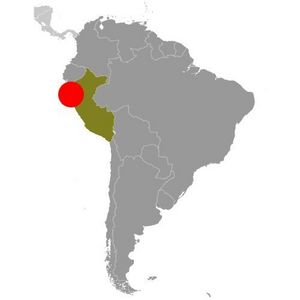
PERU IS A MAJOR EXPORTER OF MINERALS

LAND AND SEA UNDER ATTACK

OFF-SHORE EXPLORATION IS EXPLODING

IN MANY WAYS!

OIL AND WATER DO NOT MIX

GOLD MINING CONTAMINATES WATER

HOW WOULD YOU FEEL IF SOMEONE
DID THIS TO YOUR BODY?

"WE'RE HERE TO PROTECT OUR NATURAL RESOURCES"

ACTIONS SPEAK LOUDER THAN PETITIONS

A PEOPLE WHO ARE STILL ALIVE

TO CARE AND TO ACT ON THAT CONCERN

TO PRESERVE THEIR LAND AND LIVES

AND THEIR FELLOW BEINGS
A massive rebellion against the federal government involving hundreds of thousands of people is currently taking place in Peru. These people are extremely angry at how their notoriously corrupt government is complicit in the destruction of their land, water, native country and lives, by allowing mining companies like Newmont, Xstrata and BPZ to do whatever they please.
President Humala just lost several of his Cabinet members and is facing violent protests against his mining policy.
http://online.wsj.com/article/SB10001424052702303296604577450483242021866.html
Interestingly, this is the same part of Peru where massive dolphin strandings and die-offs of many other species have been on-going for the past several months. Aware researchers have known all along that these strandings and die-offs are being caused by seismic testing from oil companies and/or military activities, but now CBS photographer-become-'environmental activist' Hardy Jones is telling us that
http://bluevoice.org
"Over the next eight years...according to the Obama administration's estimates ...seismic exploration would injure up to 138,000 marine mammals and disrupt marine mammal feeding, calving, breeding and other vital activities more than 13.5 million times. This could be catastrophic for the dolphins and whales we all love. It is vitally important that we continue our work in Peru and that we inject this new evidence to stop the seismic testing off the U.S. coast."
Jones is a little behind. Aware researchers have known for DECADES that seismic testing and military activity are THE biggest threats to marine life. This is NOTHING NEW. Stopping it would be new.
Rosalind Peterson, who has balls TEN TIMES THE SIZE OF JONES (no offense, Rosalind!), has been telling us for years about the threats to marine mammals posed by the U.S. Navy. Does Jones mention them?
http://www.agriculturedefensecoalition.org/us-navy
Big organizations like the NRDCwho command millions of dollars constantly give 'wrist slaps' to 'big oil', 'defense' departments and complicit administrations for slaughtering marine mammals and TELL them to stop doing it. Does it ever make any difference? No. Do these organizations keep asking for your money? Yes.
Like almost all other 'save the whales' organizations, Jones wants your money. THIS will solve the problem, right? Wrong.
ALL governments and most 'elected' officials in all countries WORK FOR 'BIG OIL' and the mining companies, period. If they didn't, they wouldn't even BE in office. NO words, recommendations, or even that most powerful weapon of the Facebook generation, PETITIONS, are going to make any difference.
The ONLY thing that could make any real difference would be for people in general to STOP DRIVING so much, stop their stupid addiction to vehicles and hydro-carbon fuels. EVERY TIME YOU GET IN YOUR CAR, EVERY TIME YOU FILL UP YOUR TANK, YOU ARE SUPPORTING OIL COMPANIES AND THE MILITARY WHO ARE THEIR HENCHMEN. The public DEMANDS their products and is therefore complicit in the slaughter of cetaceans and other marine life. The equation is simple:
DRIVING = MARINE LIFE MURDER
The 'grand transformation', the same destructive activities involving mining, seismic testing and oil-drilling that are destroying Peru are happening all over America, Canada, Australia and New Zealand, and done by the same companies. Newmont is American but is very active in Australia, as is Switzerland-based Xstrata, who has poisoned the land around Mt. Isa with its lead mining.
The land, waters, country and lives of people in all these countries are at equal or greater risk than in Peru, yet have we seen even a glimmer of 'rebellion' from the people of these countries? NOT A CHANCE. The BIGGEST activity that can be witnessed is on Facebook.
A few hundred people are protesting the on-going gas plant in the Kimberley in Australia, but they all got their by driving their SUV's thousands of kilometers. The Great Barrier Reef, which is a WORLD HERITAGE AREA, is being dredged for the construction of SIX NEW GAS HUBS. Are the people of Australia up in arms over this? Is the federal environment minister Tony Burke up in arms and in Gillard's office demanding that this be stopped? NO WAY. 'Elected' officials and Environmental Ministers in general function as PR reps for 'big energy' and are more likely to be seen gutting environmental legislation and glorifying the 'new jobs' from mining and oil-drilling. They are also doing this:
See, in northern Peru, the people are still REAL people. Many of them are indigenous folks with direct ties to their land and to the spirit of life. They grow their own food, drink water from the ground and rivers, they are spiritually alive and in touch with the Earth. They don't own cars or over-sized houses; most of them probably don't even have electricity. They aren't obsessed with 'looking out for number one.' They are therefore capable of feeling anger in the face of blatant destruction of their home and lives, and they are capable of ACTING TO DEFEND THEMSELVES.
The people of America, Australia, Canada and New Zealand, as a whole, on the other hand, are such over-fed, drug-addicted complacent consumers of whatever is spooned into their drooling mouths that they could never be bothered even to inform themselves about what is really going on in the world or their countries, or even in their own back yards, much less DO anything about it. ARMED REBELLION? VIOLENT PROTESTS? You gotta be kidding...somebody might get hurt? PLUS there's a BIG GAME on the tellie.
I kid you not...this is the macabre reality with which we are faced. The people of northern Peru haven't been frying their brains with mobile phones and getting tranquilized from drinking fluoridated water; they are STILL ALIVE AND PLAN TO STAY THAT WAY.
The only thing that would get Americans, Canadians, Australians and New Zealanders out in the streets and protesting would be if THEIR BEEF, ELECTRICITY AND PETROL SUPPLY WAS THREATENED. On the day that happened we would see paraplegics with shot-guns rising from their wheel-chairs to DEMAND their products.
There you have it. The Anglo-American empire has nothing to fear in the way of armed rebellion or violent protest. The 'grand transformation' glorified by the president of Peru is taking place all around us while we stuff our faces and watch tv; whales, dolphins and many other members of our 'family of life' suffer and die every day because they happen to live within range of weapons or in the vicinity of 'precious' minerals. We, too, are succumbing to 'progress.'
The only form of 'precious' the western 'civilized' corn-fed mentality seems to know is 'MY precious', the gold ring of Golem, for which he was willing to murder his own brother, or so the story began...long ago but not so far away.
Ottawa launches Alberta counter-terrorism unit
"After labeling certain environmental and first nations groups as extremists and radicals, Canada’s federal government, along with the country’s top law enforcement and spy agencies, have set up a counterterrorism unit in Alberta in order to protect the province’s natural resources and infrastructure."
See, in northern Peru, the people are still REAL people. Many of them are indigenous folks with direct ties to their land and to the spirit of life. They grow their own food, drink water from the ground and rivers, they are spiritually alive and in touch with the Earth. They don't own cars or over-sized houses; most of them probably don't even have electricity. They aren't obsessed with 'looking out for number one.' They are therefore capable of feeling anger in the face of blatant destruction of their home and lives, and they are capable of ACTING TO DEFEND THEMSELVES.
The people of America, Australia, Canada and New Zealand, as a whole, on the other hand, are such over-fed, drug-addicted complacent consumers of whatever is spooned into their drooling mouths that they could never be bothered even to inform themselves about what is really going on in the world or their countries, or even in their own back yards, much less DO anything about it. ARMED REBELLION? VIOLENT PROTESTS? You gotta be kidding...somebody might get hurt? PLUS there's a BIG GAME on the tellie.
I kid you not...this is the macabre reality with which we are faced. The people of northern Peru haven't been frying their brains with mobile phones and getting tranquilized from drinking fluoridated water; they are STILL ALIVE AND PLAN TO STAY THAT WAY.
The only thing that would get Americans, Canadians, Australians and New Zealanders out in the streets and protesting would be if THEIR BEEF, ELECTRICITY AND PETROL SUPPLY WAS THREATENED. On the day that happened we would see paraplegics with shot-guns rising from their wheel-chairs to DEMAND their products.
There you have it. The Anglo-American empire has nothing to fear in the way of armed rebellion or violent protest. The 'grand transformation' glorified by the president of Peru is taking place all around us while we stuff our faces and watch tv; whales, dolphins and many other members of our 'family of life' suffer and die every day because they happen to live within range of weapons or in the vicinity of 'precious' minerals. We, too, are succumbing to 'progress.'
The only form of 'precious' the western 'civilized' corn-fed mentality seems to know is 'MY precious', the gold ring of Golem, for which he was willing to murder his own brother, or so the story began...long ago but not so far away.
Things don't have to be or stay this way. EACH of us has the ability to change how we think, live and relate to ourselves and our planet. Why we are choosing NOT to make these changes is the biggest contradiction, the biggest mystery of mysteries that I can imagine.
"CETACEAN GENOCIDE SEALING THE FATE OF 'HOMO SAPIENS'" Jeff Phillips
JEFF PHILLIPS
GREAT BARRIER ISLAND
NEW ZEALAND
JUNE 2012
Saturday, 26 May 2012
"CANADIAN GOVERNMENT AXES NATIONAL OCEAN CONTAMINATION PROGRAM"

DR. PETER ROSS

DR. GARY STERN

DR. MICHAEL IKONOMOU

DR. MICHEL LEBEUF

MARLA CONE, EHN

ORCAS AT RISK

RAMPANT OFF-SHORE OIL DRILLING

TSUNAMI DEBRIS WASHING UP

DRIVING = SUPPORTING OIL COMPANIES
= CETACEAN GENOCIDE
THIS is what we are witnessing: all forms of what used to be public and independent research and information are being systematically de-constructed/re-configured to prevent humanity as a whole from knowing what is REALLY going on in the world around us and to plug us into centrally-controlled and homogeneously sterilized channels of a pre-medicated psychic menu served up by globalization and technocracy. Unlike the legion of marine biologists who have sold out to work for the U.S. Navy or 'big oil' in one way or another, these DFO researchers who got the sack are bound to be scientists with far too much personal integrity and love of life ever to succumb to such necrophilous disambition. What will their next move be?
SINCE THE GLOBAL MILITARY APPARATUS FUNCTIONS AS 'MECHANICS' FOR THE MINING AND OIL INDUSTRIES, OWNED BY THE INTERNATIONAL BANKING CARTEL...WOULDN'T IT BE LOGICAL THAT THE SINGLE BIGGEST THING WE COULD ALL DO IN ORDER TO PROTECT THE WHALES, DOLPHINS AND MARINE LIFE IN GENERAL IS TO STOP DRIVING, STOP OUR ADDICTION TO THEIR HYDRO-CARBON SMACK?
http://www.canada.com/vancouversun/news/westcoastnews/story.html?id=68c288a0-7594-4259-a040-336dbc69eab0
Ottawa axes ocean pollution monitoring program
Canada's only marine mammal toxicologist at the Institute of Ocean Sciences on Vancouver Island is losing his job as the federal government cuts almost all employees who monitor ocean pollution across Canada.
Canada's only marine mammal toxicologist at the Institute of Ocean Sciences on Vancouver Island is losing his job as the federal government cuts almost all employees who monitor ocean pollution across Canada.
Peter Ross, an expert on killer whales and other marine mammals, was the lead author of a report 10 years ago that demonstrated Canada's killer whales are the most contaminated marine mammals on the planet. He has more than 100 published reports.
Now, he's a casualty of federal budget cuts, one of 75 people across Canada told Thurs-day his services will no longer be needed because the Department of Fisheries and Oceans is closing the nation's contaminants program.
The entire Department of Fisheries and Oceans contaminants program is being shut down effective April 1, 2013. Official letters are expected to be delivered in June, and Ross has been told he'll have a few months to wrap up his files.
"The entire pollution file for the government of Canada, and marine environment in Canada's three oceans, will be over-seen by five junior biologists scattered across the country - one of which will be stationed in B.C.," said environmental toxicologist Ross.
"I cannot think of another industrialized nation that has completely excised marine pollution from its radar," said Ross, who was informed in a letter Thursday that his position will be "affected."
Opinion: Canada's mass firing of ocean scientists brings 'silent summer'
Editor’s Note: Canada is dismantling the nation's entire ocean contaminants program as part of massive layoffs at the Department of Fisheries and Oceans. Among the scientists terminated are ones who have conducted landmark research about global pollutants for decades: Peter Ross, who is among the world’s leading experts on marine mammals and contaminants, Gary Stern, a mercury expert whose work focuses on the Arctic, Michel Lebeuf, who studies the highly contaminated St. Lawrence belugas and Michael Ikonomou, who researches flame retardants and other endocrine-disrupting contaminants in salmon and other ocean life. Ross told EHN that his main concern is the "wholesale axing of pollution research" that will leave Canada, and much of the world, without the scientific knowledge to protect whales, seals, fish and other marine life -- as well as the indigenous peoples who rely on them for their traditional foods. Many scientists say the purpose of the move by the Canadian government is not just cost-cutting but to eliminate environmental rules and protect the oil and gas industry. The following is an essay that Ross wrote Thursday for EHN. -- Marla Cone, Editor in Chief


By Peter Ross
Since being hired 13 years ago as a Research Scientist at Fisheries and Oceans Canada (DFO), I have been fortunate to conduct research on such magnificent creatures as killer whales, beluga whales, harbour seals and sea otters. I have visited some of the wildest parts of coastal British Columbia, Arctic Canada and further afield. I have been humbled by the power of Mother Nature as we deployed teams to explore and better understand the lives of creatures beneath the surface of the ocean. I have marveled at the evolutionary adaptations of marine mammals to an existence at the interface of land, sea and atmosphere. And as a scientist, I have come to learn that I possess but rudimentary powers of observation when it comes to the mystery and beauty of a vast ocean. For all of this, I remain eternally grateful.
A blend of challenging field work and cutting-edge laboratories has helped me to look into the lives of fish and marine mammals, and the ways in which some of the 25,000 contaminants on the domestic market affect their health. Our research has drawn on the combined expertise of dedicated technicians, biologists, vessel operators and aboriginal colleagues, ultimately leading to scientific publications now available around the world. This is knowledge that informs policies, regulations, and practices that enable us to protect the ocean and its resources, both for today’s users, and for future generations.
It is with apprehension that I ponder a Canada without any research or monitoring capacity for pollution in our three oceans... I am thankful for the rich array of opportunities aboard Canadian Coast Guard ships and small craft, alongside Fisheries Officers, chemists, habitat biologists and managers, together with colleagues, technicians, students and members of aboriginal communities. I have enjoyed weaving stories of wonder on such issues as the health of killer whales, effects of flame retardants on beluga whales, hydrocarbons in sea otter habitat, trends in priority pollutants in harbour seals, impacts of current use of pesticides on the health of salmon, the identification of emerging contaminants in endangered species and risk-benefit evaluation of traditional sea foods of First Nations and Inuit peoples.
...or any ability to manage its impacts on commercial fish stocks, traditional foods for over 300,000 aboriginal people and marine wildlife. Past scientific discoveries such as high levels of PCBs in Inuit foods, dioxins in pulp and paper mill effluent, and DDT-associated eggshell thinning in seabirds formed the basis for national regulations and an international treaty (the Stockholm Convention) that have led to cleaner oceans and safer aquatic foods for fish, wildlife and humans. Canada was a world leader in spearheading this profoundly important treaty, drawing on ground-breaking scientific research in tandem with the knowledge of aboriginal communities.
I am thankful to my friends, family, supporters and colleagues, who have always been there to converse, share, learn and teach – in the laboratory, in the field, in the cafeteria, in the hallway. These people have made it all worthwhile.
 |
| Ingrid Visser/Fisheries and Oceans Canada |
| Orcas swim past an oil refinery. |

It is with deep regret that I relay news of my termination of employment at Fisheries and Oceans Canada and the loss of my dream job. It is with even greater sadness that I learn of the demise of DFO’s entire contaminants research program – regionally and nationally. It is with apprehension that I ponder a Canada without any research or monitoring capacity for pollution in our three oceans, or any ability to manage its impacts on commercial fish stocks, traditional foods for over 300,000 aboriginal people and marine wildlife.
Canada's silence on these issues will be deafening this summer and beyond.
For more information about Ross' work:
Silent Snow: The Slow Poisoning of the Arctic, by Marla Cone, published by Grove/Atlantic
Subscribe to:
Posts (Atom)